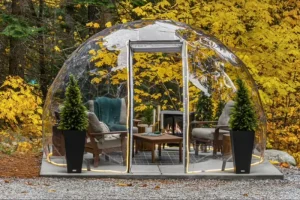
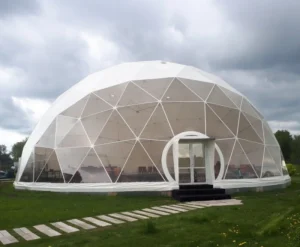
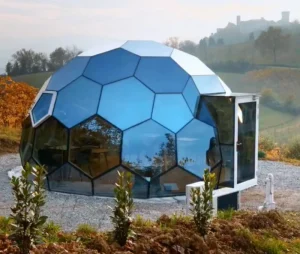
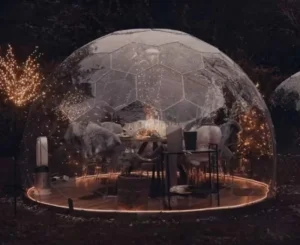
From Northern Lights observatories in Scandinavia to stargazing camps in deserts, glass domes are rapidly redefining outdoor living. These futuristic structures dominate Instagram hashtags and were named one of Forbes’ “Top 10 Disruptive Travel Designs of 2023.” This article explores why glass domes command 3x higher prices from campers and why real estate developers are racing to invest in them.
What Is a Glass Dome?
Definition & Core Design
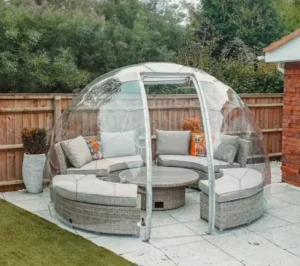
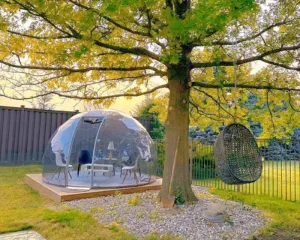
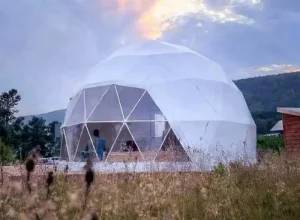
A glass dome is a semicircular structure built with high-strength curved glass panels and lightweight metal frames (typically aluminum or titanium). It combines planetarium-like immersion with modern architectural stability. Key features include:
360° Panoramic Glass: Uses laminated tempered or Low-E glass for safety and clarity.
Modular Assembly: Quick setup and disassembly for diverse terrains, from mountains to beaches.
Climate Adaptability: Built-in ventilation, retractable shades, and double insulation for -30°C to 50°C extremes.
Types of Glass Domes
Type | Use Case | Price Range |
Camping Domes | Short-term stays, stargazing | 8,000−8,000−25,000 |
Residential Domes | Full-time homes, vacation villas | 50,000−50,000−200,000 |
Restaurants, greenhouses, observatories | 100,000−100,000−500,000+ |
7 Detailed Benefits of Choosing a Glass Dome
① Immersive Connection to Nature
Astronomy-Grade Views: 180° vertical sightlines (vs. <30% window views in traditional homes) for Lie down to admire the aurora or meteor showers.
Mental Health Boost: Harvard studies show nature exposure reduces cortisol (stress hormone) by 28%.
② Energy Efficiency Breakthroughs
Passive Solar Heating: Dome shape concentrates sunlight, cutting winter heating costs by 40% (e.g., 15kWh saved daily for a 215 sq ft dome).
Smart Ventilation: Roof vents + floor intakes refresh air in 3 minutes, using 65% less energy than AC.
③ Maximized Space Utilization
Pillar-Free Design: A 323 sq ft dome offers usable space equivalent to a 484 sq ft traditional house.
Vertical Zoning: Loft bedrooms or hanging gardens leverage ceiling height.
④ Extreme Weather Resilience
Wind Resistance: Curved structure withstands 62 mph (100 km/h) winds (traditional glass rooms fail at 37 mph).
Self-Cleaning Glass: Nano-coatings reduce 90% dust buildup, relying on rain for maintenance.
⑤ Privacy Meets Openness
Smart Tinting: Switch glass from clear to opaque instantly via app, solving nighttime exposure concerns.
ASMR Acoustics: Engineered rain/wind sounds enhance sleep quality.
⑥ Low Maintenance Costs
50-Year Glass Warranty: Outlasts standard architectural glass (15-20 years).
Modular Repairs: Replace single damaged panels in 2 hours for under $500.
⑦ Asset Appreciation Potential
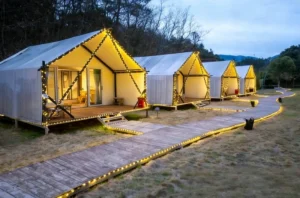
Glamping Case Study: Canada’s Alpine Glamping raised nightly rates from 120to120to400 with domes, achieving ROI in 2.3 years.
Real Estate Premium: Glass dome homes sell for 22% more than traditional houses in the same area (Zillow 2023).
Glass Domes vs. Traditional Homes: Data-Driven Showdown
Factor | Glass Domes | Traditional Cabins/Tents |
Build Time | 2-4 weeks (prefab) | 3-6 months (foundation + materials) |
Cost per sq ft | $161 (dropping 8% yearly) | $237 (rising labor costs) |
Annual Energy Cost | $800 (solar + smart systems) | $2,300 (grid-dependent) |
Scenic Value | 100% immersion | Limited by window placement |
Disaster Resistance | Survives 9.0 earthquakes, 28″ snow | Wood rot, tent leaks |
Case Studies:
Norway’s Svart Hotel: 100% energy self-sufficient via geothermal/solar, earning Nordic Green Building Platinum certification.
Dubai Desert Camp: 58% lower AC costs vs. tents, boosting summer bookings by 40%.
Conclusion: Glass Domes Are More Than Buildings—They’re a Lifestyle
As millennials pay premiums to “sleep under the Milky Way” and net-zero goals push construction innovation, glass domes perfectly bridge nature and technology. For individuals, they’re urban escape pods; for businesses, they’re Glamping 2.0 profit engines.
Contact Gaxdome today for dome catalogs, 3D design tools, and global success stories—your skyward living journey starts here!