Introduction
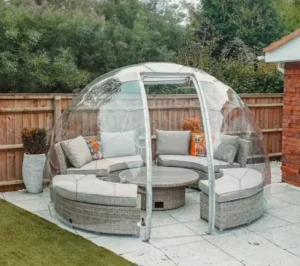
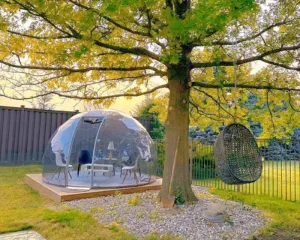
If you’re looking to create a chic greenhouse, an outdoor dining area, or a relaxing bonfire in your backyard, a garden dome tent is the perfect choice.
After deciding to purchase a garden dome tent, you’ll need to understand the styles and materials currently available on the market. Especially regarding materials, you can choose one suitable for your daily activities based on your needs.
There are three main materials used for building garden domes: polycarbonate (PC), glass, and PVC.
These three materials each have their advantages and disadvantages, but they differ significantly in functionality and cost-effectiveness. This comprehensive comparison guide will help you determine which material is best for your garden and your budget.
Overview of Garden Dome Materials
Before understanding garden domes, it’s essential to recognize some common structural materials. Domes made of different materials differ significantly in appearance, performance, and lifespan. Whether you’re seeking a high-end glass aesthetic or prefer the lightweight and easy-to-assemble PVC structure, understanding their characteristics will help you find the most suitable option for your garden space.
1. Polycarbonate Dome
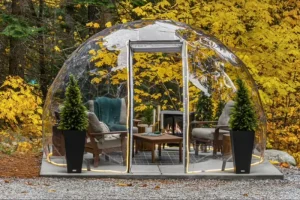
Polycarbonate is a high-strength thermoplastic material with transparency comparable to glass, yet it is lighter and stronger. Brands like Hypedome use a frameless design, with each panel interlocking like bricks to form a stable, waterproof, self-supporting structure. This design not only provides a clean and modern visual effect but also makes construction and maintenance easier.
Polycarbonate domes excel in performance: they are lightweight, impact-resistant, and not easily broken, making them ideal for environments requiring long-term outdoor use. The material itself has a UV-resistant coating, so it is not prone to yellowing or becoming brittle even with prolonged exposure to sunlight. Compared to glass, it strikes a good balance between weather resistance and practicality.
However, this material is generally more expensive than PVC domes, but much more economical than glass, so it is often considered a mid-to-high-end choice that combines aesthetics and durability.
2. Glass Dome
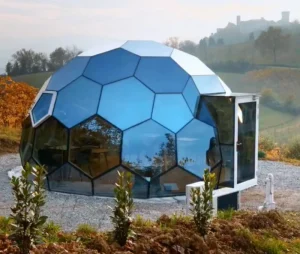
Glass domes are known for their elegance and high transparency, making them a top choice for many designers and homeowners who prioritize visual appeal. It is typically constructed by piecing together triangular glass panes with a metal (such as steel or aluminum) or wooden frame, creating a bright and pure spatial atmosphere when light passes through.
This structure is undoubtedly the most artistic in appearance, but it also brings higher requirements for construction and maintenance. The glass is relatively heavy, requiring a sturdy support system, making transportation and installation more complex. Although the glass surface is not easily scratched and maintains its clarity for a long time, its fragile nature means it needs to be handled with extra care.
Overall, glass domes are suitable for high-end settings that pursue ultimate aesthetics and have low budget and construction time requirements, such as private greenhouses, boutique cafes, or landscaped garden pavilions.
3. PVC Dome
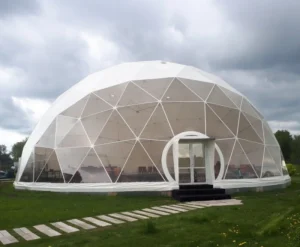
PVC domes are usually constructed with lightweight PVC pipes as a support structure, covered with a layer of transparent PVC film. These domes are known for their “lightweight” and “cost-effectiveness,” making them a popular entry-level choice for many families or small garden users.
The advantage of PVC domes is their ease of installation; assembly can be completed without complicated tools, making them ideal for temporary events or seasonal use. The material itself is flexible and rollable, facilitating storage and relocation. Meanwhile, its overall cost is relatively low, making it an economical and practical solution.
However, PVC material is prone to aging when exposed to outdoor environments for extended periods. The transparent film may wrinkle or yellow, and its UV protection is limited. Therefore, this structure is more suitable for short-term use or temporary installations than long-term fixed installations.

Why Polycarbonate Domes are the First Choice
Among many garden dome materials, polycarbonate stands out for its excellent overall performance, becoming the most favored choice for designers and homeowners. It combines strength, lightness, and flexibility, not only withstanding strong winds and impacts but also maintaining good stability under various climatic conditions.
Compared to other materials, the biggest advantage of polycarbonate domes lies in the “balance between practicality and aesthetics.” It weighs only one-sixth of glass, yet has almost the same light transmittance; at the same time, the material surface has a built-in UV-resistant coating, effectively blocking aging or yellowing caused by direct sunlight, thus significantly extending its service life.
In contrast, while glass domes offer unparalleled visual appeal, they are heavy, fragile, and expensive, requiring more complex support structures during installation and resulting in higher maintenance costs. PVC domes, on the other hand, are more budget-friendly, but their weather resistance and lifespan are limited; prolonged exposure to sunlight can cause deformation, cracking, or loss of transparency.
Therefore, polycarbonate domes achieve an ideal balance between durability, safety, insulation performance, and ease of installation. Whether for a family garden leisure space or a high-end landscape greenhouse, they provide a more durable and stable user experience while ensuring aesthetics.
Next, we will use polycarbonate as a benchmark to compare the differences between glass and PVC domes in terms of structural performance, insulation effect, and maintenance costs, helping you more intuitively find the solution that best suits your needs.
Comparison of Polycarbonate Domes and Glass Domes
When discussing garden domes, glass and polycarbonate are often the two materials most easily compared. Both glass and polycarbonate domes offer high transparency and aesthetic appeal, but they differ significantly in structural safety, comfort, installation difficulty, and cost. Below, we analyze these differences in detail across five key dimensions.
1. Durability
While glass is strong, it is also quite fragile. It is easily shattered by strong impacts, falling objects, or hail, posing potential safety hazards, especially in homes with children or pets.
Polycarbonate, on the other hand, is known as “unbreakable glass” due to its extremely high impact resistance. Its impact strength is 200 times that of ordinary glass, yet it weighs only half as much. This characteristic allows polycarbonate domes to easily withstand hail, storms, and accidental impacts, remaining stable and safe over long-term use, and resistant to deformation or breakage.
2. Thermal Insulation and Comfort
Thermal insulation directly affects the comfort level inside the dome. Single-pane glass has high thermal conductivity, easily losing heat in winter and rapidly heating up in summer; while double-pane insulated glass offers better insulation, it is expensive, heavy, and difficult to install.
Polycarbonate panels have a natural advantage in this regard. High-quality hollow polycarbonate panels possess excellent thermal insulation, maintaining warmth in winter and blocking some heat in summer, creating a more balanced and pleasant climate inside the dome.
3. UV Protection Performance
UV radiation is a major factor causing material aging and skin damage. Ordinary glass blocks approximately 50% of UV rays; prolonged exposure inside a glass dome can lead to excessive UV exposure.
High-quality polycarbonate panels typically have a UV-protective coating that blocks up to 99.9% of UV rays. This not only protects users from harm but also extends the lifespan of furniture, plants, and decorations inside the dome, preventing fading or damage from sunlight.
4. Installation Ease
Due to their weight and complex structure, glass domes usually require professional construction teams and lifting equipment, resulting in long installation periods and higher risks. Each glass panel needs precise positioning and sealing; any error can lead to water leakage or cracking.
In contrast, the lightweight design of polycarbonate domes makes installation much easier. Most PC dome kits feature a modular design, allowing a typical household of two to three people to assemble them within a day. This efficiency not only saves on labor costs but also makes DIY installation possible.
5. Cost Comparison
In terms of materials and installation costs, glass domes typically cost several times more than polycarbonate domes. For example, a medium-sized dome:
- Polycarbonate dome (approximately 3.5 meters in diameter): Approximately £3,000
- Glass dome (approximately 3.6 meters in diameter): Approximately £9,000
While the initial cost of polycarbonate is slightly higher than PVC, it offers greater overall cost-effectiveness in the long run, considering durability, insulation, and maintenance costs.
Polycarbonate (PC) Dome vs. Glass Dome
Characteristic | Polycarbonate (PC) Dome | Glass Dome |
Durability | Extremely impact-resistant, not easily broken | Fragile but scratch-resistant |
Insulation | Excellent insulation due to hollow core structure | Poor insulation with single layer; costly with double glazing |
Installation | Lightweight and easy to install or DIY | Complex installation requiring professional equipment and team |
Cost | Moderate overall cost, economical installation | High material and construction costs |
Appearance | Modern, lightweight, and transparent | Luxurious, crystal-clear look |
Overall, polycarbonate domes are significantly superior to glass domes in terms of safety, comfort, and economy. They offer superior impact resistance and insulation while maintaining high light transmittance and aesthetics, making them ideal for residential gardens, pavilions, or greenhouses. While glass domes offer a more luxurious visual appeal, they are better suited for high-end settings with ample budgets and a pursuit of ultimate aesthetics.

Comparison of Polycarbonate Domes and PVC Domes
Although PVC domes are more attractive in price, the difference in long-term durability, comfort, and overall performance between them and polycarbonate domes is significant. Below, we will compare the performance of these two materials in detail from five dimensions.
1. Durability
PVC membranes typically have a lifespan of only a few years. Prolonged exposure to sunlight, high temperatures, rain, and wind will gradually age, become brittle, and may even tear or deform. This means it is more suitable for temporary or seasonal use.
Polycarbonate, on the other hand, is completely different. Its sheets have excellent impact resistance and anti-aging properties, maintaining a stable structure and appearance even under strong ultraviolet radiation or extreme temperature differences. High-quality PC sheets often have a lifespan exceeding 10 years, providing you with a long-term, reliable, and year-round shelter.
2. Thermal Insulation Performance
PVC membranes have extremely limited thermal insulation performance, offering almost no effective heat retention. Direct sunlight during the day causes the interior to heat up rapidly, while the temperature drops sharply at night, resulting in an unstable user experience.
In contrast, polycarbonate has a thermal conductivity approximately 4.5 times lower than PVC. This low thermal conductivity allows it to effectively retain heat in winter and reduce heat buildup in summer, thus maintaining a more constant and comfortable indoor temperature. Whether used as a garden greenhouse, a leisure dome, or an outdoor office, PC materials significantly improve the climate balance of a space.
3. UV Protection
Inexpensive PVC film offers virtually no effective UV protection. Prolonged exposure to sunlight not only accelerates the aging and yellowing of the film itself but can also damage plants and furniture inside the dome.
Polycarbonate panels, on the other hand, have a UV-protective coating added during the manufacturing process, blocking up to 99.9% of UV rays. This not only protects users from UV damage but also effectively extends the overall lifespan of the dome, maintaining its clear and bright appearance for a long time.
4. Installation and Maintenance
PVC domes are known for their lightweight and easy installation, often completed by an individual in a short time. However, due to the lower strength of the membrane material, problems such as loosening, cracking, or support deformation are prone to occur during use, requiring frequent repairs or replacements.
While the initial installation of a polycarbonate dome takes slightly longer (generally about 5-6 hours), it requires almost no maintenance after completion. Regular cleaning is sufficient to maintain its transparency and appearance, and the structure remains stable over many years of use, making it ideal for users seeking a “one-time setup, long-term use” solution.
5. Cost Comparison
In terms of initial investment, PVC domes are clearly cheaper.
- PVC dome (3.6 meters in diameter): Approximately £1,000
- Polycarbonate dome (3.5 meters in diameter): Approximately £3,000
If your goal is to create a temporary summer shading or seasonal recreational space, the low cost of PVC is indeed attractive.
However, if you want the dome to be comfortable year-round and withstand years of weathering, then polycarbonate offers better long-term value. The maintenance costs and energy consumption from frequent replacements of PVC film often offset the initial savings within a few years.
Comprehensive Comparison of the Three Materials
Feature | Polycarbonate Dome | Glass Dome | PVC Dome |
Durability | +++ | ++ | + |
Insulation | ++ | ++ | + |
UV Protection | +++ | ++ | + |
Ease of Installation | ++ | + | +++ |
Aesthetics | +++ | +++ | + |
Cost | ++ | + | +++ |
Maintenance | +++ | ++ | + |
Customization | +++ | ++ | + |
PVC domes are an economical and lightweight option, suitable for temporary events or short-term use; while polycarbonate domes represent higher safety, comfort, and durability. They can maintain structural stability and visual appeal for ten years or more, making them suitable not only for private gardens and outdoor recreational spaces but also increasingly becoming the preferred choice for high-end landscaping and commercial uses.
Additional Advantages of Polycarbonate Domes
When you choose polycarbonate, you are not only choosing a material but also the convenience brought by modern dome design:
- Frameless Design for Clear Views: High-quality PC domes typically feature frameless or hidden frame designs, which minimizes obstruction of views, allowing you to fully enjoy the garden scenery.
- Low Maintenance: Due to its excellent anti-aging and impact resistance, PC domes require very little maintenance after installation, saving you significant time and effort.
- Various Sizes and Customization: PC material is easy to process and customize, allowing you to find the right size and design whether you need a small meditation pod or a large event space.
- Resistant to Extreme Weather: The lightweight and high-strength structure of PC domes makes them perform exceptionally well in blizzards and strong winds, providing robust protection for you and your property.
Garden Dome Selection Recommendations
PVC, glass, and polyester acetate each have their own advantages and disadvantages. When choosing, you can combine them according to your needs and budget.
Long-lasting Durability and Aesthetics → Polycarbonate (PC): If you need a greenhouse or outdoor space that can last for many years, is safe and reliable, and effectively insulates, PC is your best all-around choice. It balances cost, durability, and functionality.
Luxurious Appearance and Ample Budget → Glass: If you seek ultimate transparency and a luxurious visual effect, have a very generous budget, and don’t mind complex installation and maintenance, glass offers unparalleled elegance.
Short-term use or limited budget → PVC: If you only need a temporary, low-cost rain and dust cover, or only for a few months during the warmer months, PVC can be an economical temporary solution.
Conclusion
In comparing polycarbonate, glass, and PVC garden dome materials, polycarbonate domes have become the preferred choice for most users due to their perfect balance of safety, insulation, durability, and cost-effectiveness. It truly delivers on its promise of high quality, low maintenance, and year-round usability.
While glass domes are aesthetically pleasing, their cost and maintenance complexity make them suitable for niche luxury applications. PVC domes are better suited for extremely tight budgets or temporary uses.
Creating a long-term, comfortable, safe, and functional sanctuary for your garden space is key to enjoying gardening with ease. Choosing polycarbonate means choosing a future-oriented solution designed for real-world gardening enthusiasts.