What Is a DIY Geodesic Dome?
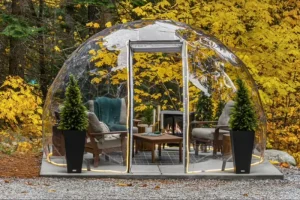
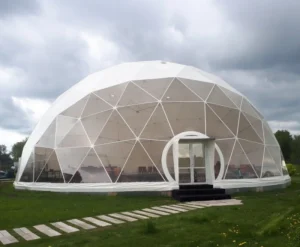
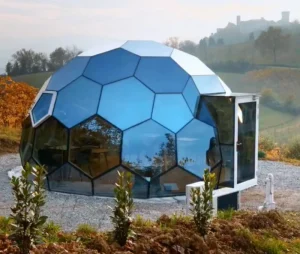
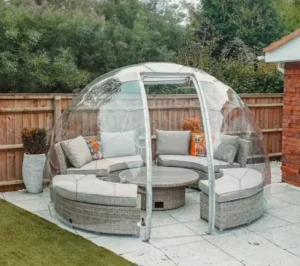
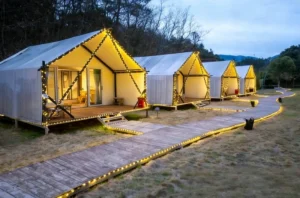
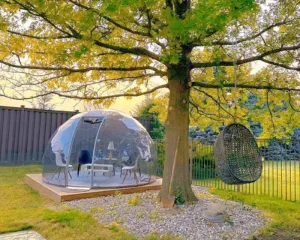
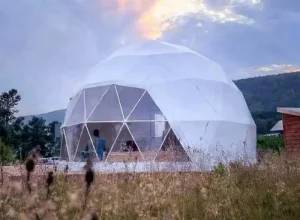
A Geodesic Dome is a spherical or partial-spherical structure composed of a network of triangles that distribute stress evenly. Popularized by American architect Buckminster Fuller, this structure is known for its strength, efficiency, and minimal material use. A DIY Geodesic Dome refers to a geodesic dome that individuals or small teams can build themselves using accessible materials like wood, PVC pipes, bamboo, or metal rods. These domes are widely used in greenhouses, art installations, glamping tents, children’s playhouses, temporary shelters, and backyard structures.
Why Build a DIY Geodesic Dome?
🏠 Strong & Lightweight
The triangular structure distributes stress evenly, offering excellent wind and snow resistance.
Lightweight materials make transport and construction easier.
⬆️ High Material Efficiency
Geodesic design minimizes surface area and material use.
Requires less raw material than conventional buildings.
🌟 Modular & Scalable
You can customize frequency and size to meet specific needs.
Easily replaceable parts make maintenance simple.
🌿 Eco-Friendly
Suitable for sustainable materials like bamboo or reclaimed wood.
Can be covered with polycarbonate panels or PVC film for insulation and light diffusion.
Types of DIY Geodesic Domes & Suitable Materials
Wooden Rods + Custom Joints
Ideal for woodworkers who can craft their own hubs and cut custom angles.Standard Rods + Commercial Hub Kits
Products like “Build With Hubs” allow users to assemble domes with pre-made connectors.PVC Tubes + Shrink Film Covers
Popular for budget builds and educational purposes; requires some geometric calculations.Bamboo + Steel Plate Connectors
Suitable for outdoor use; steel hubs offer strength but require tools for cutting and assembly.

Planning Your DIY Geodesic Dome
1. Define the Parameters: Diameter, Frequency, and Covering
Frequency (2V, 3V, etc.) determines complexity and number of struts.
Diameter impacts volume and usage.
Choose covering based on insulation, durability, and light transmission.
2. Use Online Dome Calculators (like Acidome)
Input your dome’s diameter and frequency to get strut lengths and angles.
3. Choose Your Hub System
Pre-made hubs for quick assembly.
DIY connectors using PVC segments or metal plates.
Laser-cut hubs offer durability and precision.
4. Material Suggestions
Struts: Use treated 2×4s, bamboo, or hardwood rods.
Connectors: Customize for depth and fastener type.
Covering: Polycarbonate sheets recommended over shrink film for durability.
DIY Build Process (Example: 3V Wooden Dome)
Step 1: Gather Materials
Struts: Cut according to calculator outputs.
Hubs: Use PVC pipe segments or hub kits.
Tools: Screws, drills, saws, paint, covering materials.
Step 2: Cut and Prepare Struts
Cut lengths based on calculator.
Angle cut the ends to match geometry.
Sand and coat with protective paint.
Step 3: Create Hubs
Drill holes in PVC pipes or assemble metal hub plates.
Galvanize or paint steel to prevent rusting.
Step 4: Assemble Frame
Start with the base ring and build upward layer by layer.
Follow geometric layout strictly to ensure structural stability.
Use level tools to maintain symmetry.
Step 5: Install the Cover
Attach polycarbonate panels or secure film with wooden battens.
Avoid using shrink film for long-term use due to yellowing and brittleness.
Step 6: Final Touches
Paint, seal, and weatherproof the structure.
Add doors, windows, ventilation, or insulation as needed.
Case Studies
🚿 Greenhouse Dome
Northern Homestead’s 4.57m 3V greenhouse dome uses 3″ PVC hub reinforcements to survive snow and wind loads.
🌐 Art Installation
“Pollution Pods” by Build With Hubs connects multiple domes to simulate air conditions of different cities.
🛠️ Dome Kit Builds
Tiny Society showcases Ekodome Terra 22 ft kits as great solutions for backyard glamping or home offices.
Frequently Asked Questions (FAQ)
Q1: Can I use shrink film as a cover?
A: Not recommended. Although cheap, it lacks transparency and durability over time.
Q2: Which is better: wood, PVC, or metal?
Each has pros and cons:
Wood is natural and easy to work with.
PVC resists rot but lacks rigidity.
Metal is durable but may require welding.
Q3: How can I ensure the dome resists wind and snow?
Choose higher frequency for better structural support, use sturdy materials, and install secure covers.
Q4: How to cut angles precisely?
Use outputs from Acidome and tools like miter saws to cut correct angles.