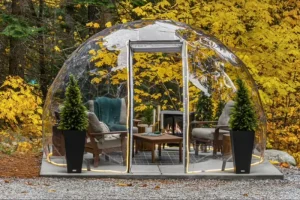
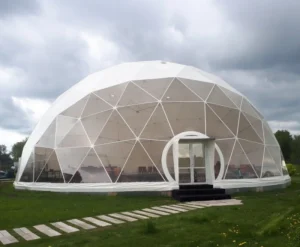
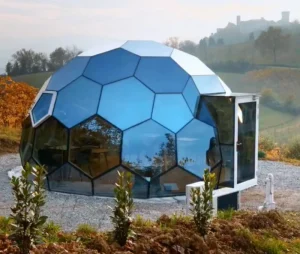
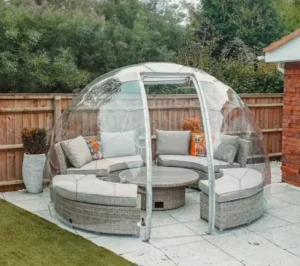
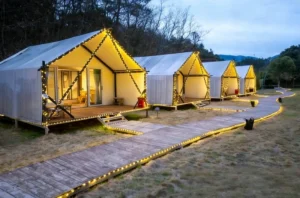
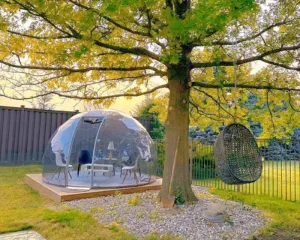
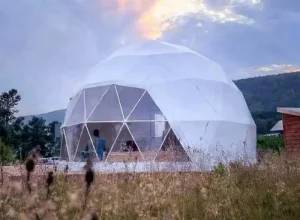
Perhaps you’ve seen this type of building a glass dome – at high-end wedding venues, restaurants in scenic areas, or popular photo spots on social media. It typically features a rounded dome shape and large glass structures, making it stand out among other buildings and easily giving a first impression of sophistication.
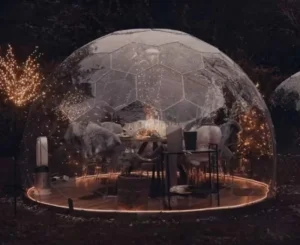
This structure is popular not only because of its appearance. During the day, natural light can enter the interior without obstruction, making the entire space bright and airy, perfect for events or dining. At night, when the lights are on, the indoor and outdoor landscapes complement each other, creating a soft and romantic atmosphere – a key reason why many wedding and catering projects choose it.
However, a glass dome is not a “one-size-fits-all” solution. Compared to ordinary tents or conventional buildings, it has higher requirements in terms of cost, construction conditions, and privacy control. If these factors are not fully considered during the initial planning stages, problems can easily arise during later use.
This article will analyze the characteristics of glass domes in detail, focusing on their advantages and disadvantages, and examine which scenarios they are suitable for based on actual projects, helping you make a more informed decision.
4 Pros of Glass Domes
The reason why glass domes are increasingly used in high-end events and luxury camping projects is not just their attractive appearance. In practical use, they excel in spatial experience, visual appeal, and project visibility, often becoming the core highlight of the venue. Because of these advantages, glass domes are gradually becoming the preferred choice for many high-end projects.
1. Strong Visual Impact and High Spatial Recognition
The unique dome shape of the glass dome makes it a landmark building in itself. Data shows that in wedding or scenic area projects, the visual appeal of a glass dome can increase photo opportunities by 30%-50%, bringing additional exposure and traffic to the project.
The sense of depth created by the dome design makes the space appear spacious and luxurious, creating a romantic and dreamy atmosphere. Compared to ordinary tents or traditional buildings, it provides a more ceremonial and visually impactful spatial experience, easily becoming a highlight for commercial promotion.
2. Excellent Natural Lighting and Strong Sense of Transparency
One of the biggest advantages of a glass dome is its natural lighting. Taking a dome with a 10-meter diameter and fully transparent glass as an example, the indoor illuminance can reach 400–600 lux during the day, almost meeting the lighting needs for daytime activities or dining without the need for additional artificial lighting.
This transparency not only makes guests more comfortable when dining or holding wedding ceremonies in the sunlight, but also saves energy costs. For high-end restaurants or cultural and tourism attractions, this lighting advantage can significantly improve user satisfaction and dwell time, making the overall experience more superior.
3. Clear Span Design, Flexible Layout
Most Glass Domes use a clear span structure, meaning there are no supporting columns in the middle. A 12-meter diameter dome can provide approximately 113㎡ of usable space, allowing for flexible arrangements for banquets or events for 100–120 people.
This design improves space utilization, making wedding, exhibition, or banquet layouts more flexible while maintaining visual unity and spaciousness. Compared to ordinary tents or buildings, Glass Domes have a significant advantage in terms of layout flexibility.
4. High-End Image, Strong Premium Potential
Glass Domes inherently possess a high-end attribute. In wedding or catering projects, using a glass dome can increase venue rental fees by 20%–40%. The unique shape and lighting effects also make the project more attractive in marketing and promotion, increasing brand recognition.
For high-end project operators, a Glass Dome is not only a functional building, but also a symbol of image and experience, which can significantly enhance the commercial value of the project.
4 Cons of Glass Domes
Of course, even the most beautiful buildings have their limitations. While Glass Domes excel in aesthetics and experience, there are aspects to consider regarding cost, construction, and privacy. Failure to understand these may lead to problems during project implementation. Below, we will explain these potential issues one by one.
1. High Cost
The construction cost of a Glass Dome is significantly higher than that of ordinary tents or membrane structures:
- High-strength steel structure frame: approximately $200–350 per square meter
- High-transparency tempered glass: approximately $100–200 per square meter
- Transportation and installation: A single 10–12 meter diameter dome may require a professional team of 10–15 people, with a construction period of 7–10 days.
Therefore, for projects with limited budgets or temporary events, the high cost may be a limiting factor.
2. Summer Heat Insulation and Glare Issues
The all-glass design is prone to the greenhouse effect in summer, with indoor temperatures potentially 5–10°C higher than the outside, and strong direct sunlight can cause glare.
Common solutions include:
- Low-E or double-glazed glass: heat insulation rate can be increased by 30%–50%
- Electric blinds or curtains: flexible control of light
- Partial translucent glass or coatings: reduce direct sunlight intensity
These measures can improve comfort but will increase additional investment, usually accounting for 10%–15% of the total construction cost.
3. Lack of Privacy
When the lights are on at night, the transparent glass may allow external viewing of indoor activities, making it unsuitable for situations requiring high privacy. This can be improved by:
- Installing adjustable curtains or blackout blinds
- Using opaque or frosted glass in some areas
- Arranging plants or screens inside to create visual barriers
Although these methods can improve privacy, they still require careful planning during the design phase.
4. High Installation and Foundation Requirements
Glass Domes have strict requirements for foundations and construction precision:
- The foundation needs to withstand a structural load of 150–200 kg per square meter
- Installation precision requires ±5 mm to ensure structural stability
- Not suitable for frequent disassembly and reassembly or temporary use
For temporary events or pop-up projects, the complexity of construction may increase costs and risks.

Types of Projects Best Suited for Glass Domes
Due to their unique shape and strong sense of transparency, Glass Domes have been widely used in high-end events, cultural tourism projects, and experiential commercial spaces in recent years. Compared with traditional buildings or ordinary tents, glass domes emphasize visual effects and spatial experience, making them more suitable for projects that require a specific image and atmosphere.
1. High-End Wedding and Event Spaces
In the field of weddings and high-end events, Glass Dome applications are very well-established. Lawn weddings, garden weddings, vineyard weddings, and scenic wedding venues are all ideal for using glass domes as the main event space.
The natural light provided by the large glass surfaces means that daytime ceremonies do not require artificial lighting, making the space feel more transparent and pure. The dome structure itself also enhances the sense of ceremony, and with the right lighting and soft furnishings, it can easily create a high-end, romantic wedding atmosphere.
For corporate dinners, product launches, or important ceremonies, Glass Dome also offers advantages. The clear span design allows for more flexible space layouts, typically accommodating approximately 100–150 people, and the overall visual effect is significantly superior to traditional banquet halls, making it easier to become a highlight of the event.
2. Restaurants, Cafes, and Light Commercial Spaces
In landscape dining and light commercial projects, Glass Dome is often used as a core operating space or a distinctive area. Scenic cafes, trendy restaurants, and garden restaurants, through the use of glass domes, can maximize the introduction of natural light and surrounding landscapes, enhancing the overall dining experience.
During the day, ample natural light makes the space bright and comfortable; at night, the interior lighting creates a soft atmosphere through the glass, enhancing the space’s attractiveness. The unique appearance also encourages customers to take photos and share them, bringing additional exposure and organic traffic to the restaurant.
3. Cultural Tourism and Scenic Area Supporting Buildings
In cultural tourism and scenic area projects, Glass Dome is often used as a reception center, viewing rest area, or activity display space. Compared to traditional enclosed buildings, glass domes are easier to integrate with the natural environment and do not disrupt the original landscape views.
For example, a Glass Dome located by a lake, in a mountainous area, or in a forest allows visitors to enjoy the surrounding scenery while resting indoors. The clear span structure also facilitates the arrangement of seating, exhibitions, or temporary activity areas, making the space both functional and aesthetically pleasing, improving the overall project quality.
4. High-End Glamping and Resort Projects
In high-end glamping and resort projects, Glass Dome is often used as a scenic accommodation unit or private viewing space. The glass dome provides expansive views, allowing guests to directly experience the natural environment, an experience that is difficult to achieve in traditional accommodation spaces.
By incorporating supporting facilities such as air conditioning, underfloor heating, and shading systems, the Glass Dome can be used year-round, providing both comfort and long-term operational viability.
The rational internal layout allows for the division of resting areas, sleeping areas, and viewing areas within a limited space, enhancing the overall guest experience.
Which scenarios are less suitable for using a Glass Dome?
Despite its significant advantages, the Glass Dome is not suitable for all projects:
- Temporary pop-up events or short-term exhibitions: Long construction period and high dismantling costs.
- Projects requiring frequent relocation or high-frequency dismantling: Lack of flexibility.
- Industrial, warehousing, and other functional buildings: Low aesthetic requirements, making the use of a dome less cost-effective.
- Spaces requiring extremely high privacy: The fully transparent structure easily exposes internal activities at night.
In these scenarios, ordinary tents, Atrium Tents, or Clear Span Tents are often more economical and better suited to practical needs.
Key factors to consider before choosing a Glass Dome
Before deciding whether to use a Glass Dome, it is recommended to evaluate the following aspects:
- Project positioning: Is the project centered on image display and experience?
- Usage period: Long-term fixed use is more suitable for glass domes.
- Site conditions: Does the site have a stable foundation and good views?
- Supporting budget: Does the budget include investment in shading, air conditioning, and insulation systems?
Only when the positioning is clear and the conditions are met can the Glass Dome truly realize its value and become an important spatial solution for enhancing project attractiveness and commercial returns.
Summary
The Glass Dome has both outstanding advantages and certain limitations. Whether it is suitable for your event or project requires a comprehensive assessment of its advantages and disadvantages based on actual needs, focusing on whether these shortcomings are within an acceptable range. Only when the positioning, budget, and usage scenarios match can the glass dome truly deliver value.
If you are looking for a high-quality, customizable Glass Dome Tent, please contact Gaxdome. As a professional dome tent manufacturer, we not only provide reliable product quality but also offer a one-stop service from design to installation based on project needs, providing complete and feasible spatial solutions for your event or project.