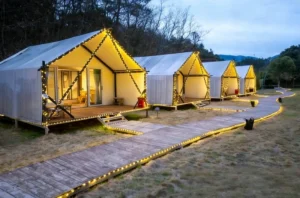
When constructing a campground, a high-end scenic hotel, or an experiential commercial space, the dome structure is not merely a matter of form. In fact, the performance data of the structural form directly impacts your operational safety, long-term maintenance costs, and customer experience.
When choosing a dome for your project, you’ll find two of the most common structures on the market: triangular glass domes and hexagon glass domes. At first glance, they both appear beautiful and immersive, but the differences between them are significant.
What is a Triangular Glass Dome?
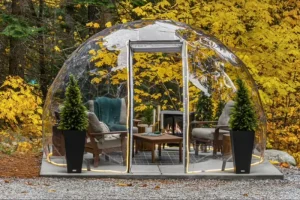
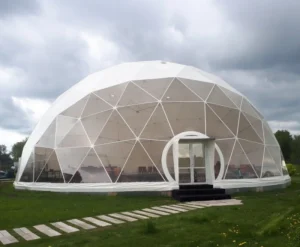
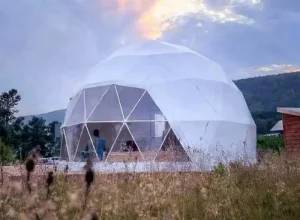
A triangular glass dome is a spherical structure composed of multiple triangular panels, its design principle derived from geodesic architecture. Because triangles inherently possess extremely high geometric stability, this type of dome can evenly distribute external forces such as wind and snow pressure throughout the entire frame, making the overall structure very robust.
Its exterior is composed of numerous small triangular grids, each node reinforced and connected, forming a spherical mesh-like structure. This structure not only remains stable in windy areas and environments with frequent snowfall, but also brings a strong sense of technology and futurism. Its rounded appearance and uniform lines make the entire space resemble a modern architectural work of art.
Whether you’re planning a high-end scenic hotel, campsite accommodation, or creating a large exhibition space, a triangular dome can provide a spacious, stable, and visually impactful environment while meeting the needs of long-term use and safety.
What is a Hexagon Glass Dome?
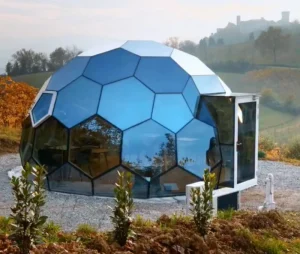
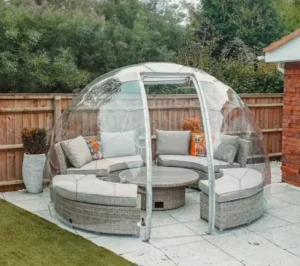
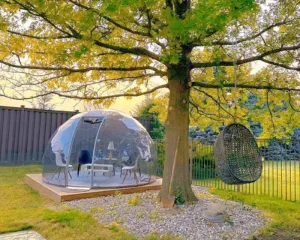
A hexagon glass dome is constructed using larger hexagonal panels. Sometimes, to fit the spherical surface, a small number of pentagonal panels are also incorporated. Compared to triangular domes, hexagonal domes have larger, fewer modules, and fewer nodes, making the construction process more efficient and simpler, and naturally lowering the overall cost.
Due to the reduced number of panels, hexagonal domes can be erected very quickly, making them suitable for projects requiring rapid deployment, such as courtyard cottages, guesthouse rooms, landscape bubble houses, and commercial pop-up spaces. Aesthetically, they present a clean and strong geometric beauty, resembling a modern “crystal house,” making them particularly suitable for urban courtyards or boutique design spaces.
While their load-bearing capacity is slightly less than that of triangular domes, it is perfectly adequate for most plains climates. If you need a dome structure that is quick to install, easy to maintain, aesthetically pleasing, and budget-friendly, then a hexagon glass dome is often the more suitable option.
Triangular Domes VS Hexagonal Domes: A Comprehensive In-Depth Analysis
While both glass structures can achieve the function of a transparent dome, their practical applications differ significantly. You need to consider eight dimensions, including structure, cost, and experience, to ensure your investment yields the best return.
1. Structural Stability and Environmental Adaptability
In terms of structural stability, triangular domes have an overwhelming advantage. Benefiting from geodesic principles, they possess superior resistance to wind, snow, and earthquakes, making them arguably the “king of structures” among glass domes.
For example, high-end triangular domes can be designed to withstand wind speeds exceeding $150 km/h, making them the only choice for windy, high-altitude, or snowy areas due to their architectural-grade structural reliability.
In contrast, hexagon glass domes also achieve a good level of stability, sufficient for typical climatic conditions. However, their overall load distribution efficiency is not as good as triangular structures when facing extreme weather, so careful evaluation is necessary if located in a high-risk environment.
2. Initial Cost and Market Positioning
In terms of initial cost, hexagon glass domes are significantly more economical. Their panels and frames are more standardized, reducing production and labor costs, making them ideal for budget-sensitive projects or projects requiring rapid scalability.
Triangular domes, due to their complex geometric design, numerous customized connection nodes, and high-precision manufacturing requirements, typically cost 20%-40% more than hexagonal domes. They are positioned as high-end, architecturally-grade long-term investments.
3. Construction Cycle and Installation Difficulty
If your project prioritizes speed, a hexagon glass dome is ideal. Due to the fewer panels and higher modularity, on-site installation is quick, with a construction cycle typically requiring only 1 to 2 weeks.
The construction cycle for a triangular glass dome is relatively longer, potentially requiring 2 to 4 weeks. This is because hundreds of triangular units need to be precisely assembled on-site, demanding a high level of professionalism and patience from the construction team. If you need to be operational quickly, this factor must be taken into account.
4. Interior Views and Visual Experience
The two structures offer different visual experiences. Hexagonal domes have larger panels and fewer frame lines, providing a simpler, cleaner view. When stargazing within them, visual distractions are minimal, closely resembling the effect of floor-to-ceiling windows.
While triangular glass domes offer expansive views, the numerous tiny frame lines dividing the glass create a “grid-like” effect. However, this dense grid also contributes to its unique technological and futuristic aesthetic.
5. Maintenance and Upkeep Costs
Hexagon glass domes have lower maintenance costs and are simpler to maintain. Fewer nodes and panels reduce potential leak points, making daily cleaning and maintenance easier.
Triangular glass domes, due to their numerous sealing nodes and fine panel edges, require more time and effort for regular inspections and cleaning, making later maintenance relatively more complex.
6. Size and Span Limitations
If you need to cover an extremely large space, a triangular dome is your only option. Utilizing a geodesic structure, it can easily achieve spans of 20 to 30 meters in diameter without any central support columns.
The span of a hexagonal dome is relatively limited, typically around 8 to 12 meters, sufficient for guesthouses and courtyards, but unsuitable for large event centers.
7. Design Flexibility and Material Compatibility
Hexagon glass domes offer greater design flexibility. Their structure is closer to that of walls, making them easier to integrate with composite materials such as insulation panels and wood walls, achieving a semi-transparent, semi-insulated hybrid design.
Conversely, triangular glass dome designs must strictly adhere to geodesic principles; structural modifications or the integration of other materials are significantly more difficult and costly.
8. Living Attributes and Comfort
Hexagon glass domes, with their better material compatibility, offer superior living comfort. They allow for easier integration of insulation layers, doors, windows, and electrical wiring, and privacy and year-round comfort are more easily improved, making them closer to a fully functional “glass house.”
Triangular domes, due to their fully transparent nature, require more complex and expensive systems to achieve insulation and privacy.
| Type | Triangular Glass Dome | Hexagon Glass Dome |
|---|---|---|
| Structural Stability | Extremely High (Best Choice) | Good (Meets Daily Needs) |
| Initial Cost | Higher, Long-Term Investment | Lower, High Cost-Effectiveness |
| Construction Period | Long, High Installation Difficulty | Short, Easy Installation |
| Internal Visibility | Strong Grid Sense, High-Tech Feel | Simple and Open, Less Interference |
| Best Uses | High-Wind/Snow Areas, Scenic Hotels, Long-Term Assets | Courtyard Leisure, Commercial Pop-Up, Quick B&B Setup |
| Maintenance Difficulty | Higher, Many Nodes | Lower, Fewer Panels |
How to Choose the Right Dome Structure for Your Project
Choosing a dome structure is not arbitrary; it directly relates to the project’s safety, user experience, and return on investment. When making an informed choice, you need to consider three core factors: project goals, budget, and geographical environment.
1. Consider the Usage Environment and Safety
The dome’s geographical location directly influences your choice.
High-Wind/High-Snow Areas: If the project is located by the sea, on a mountaintop, or in northern regions with heavy annual snowfall, prioritizing safety is the wisest course of action. Triangular glass domes, with their balanced structural design, can save you significant future maintenance costs while ensuring safety.
Urban or Plain Areas: If the dome is located in an urban courtyard or relatively calm environment, the stability of a hexagonal dome is sufficient. This allows you to invest the saved budget in interior design and comfort enhancements.
2. Matching Project Type and Budget
Different project types and budgets will influence your choice: Long-term commitment, seeking an architectural experience: If the budget is ample and you want the dome to be a highlight of the project, a triangular dome is ideal. It is not only sturdy and durable but also presents a unique architectural aesthetic.
Rapid setup, limited budget: Hexagon glass domes are better suited for projects requiring quick implementation. Whether saving on construction costs or wanting to put it into use as soon as possible for efficient cash flow, the hexagonal structure can meet your needs.
Short-term commercial events or rentals: The rapid setup and dismantling advantages of hexagonal domes make them the best choice for commercial pop-ups, exhibitions, or temporary events.
3. Interior Space Preferences and Design Flexibility
Interior space design is also a crucial factor in structural selection:
For a clean view and a technological feel: Large hexagonal panels minimize visual interference from the frame, creating a spacious and uncluttered interior.
For material integration needs: If your design requires partial wall insulation, air conditioning, or increased privacy, hexagonal structures offer greater flexibility in integrating glass with other materials, making construction and modifications easier.
By considering geographical location, project type, budget, and interior space preferences, you can more clearly determine which dome structure best suits your project. The right choice not only enhances the user experience but also maximizes return on investment while avoiding unnecessary future maintenance costs.
Gaxdome: Your Trusted Expert in Customized Dome Structures
As a leading professional dome tent manufacturer, Gaxdome is committed to providing you with high-quality, high-performance triangular and hexagonal glass dome structures to meet your diverse needs, from luxury camping to high-end commercial displays. Whether your project demands extreme structural stability or stringent control over construction efficiency, Gaxdome offers precise solutions.
Gaxdome not only offers standardized products but also focuses on providing flexible and professional customization services to global clients:
- Size and Structure Customization (OEM/ODM Support)Gaxdome boasts a strong design and engineering team that can provide OEM (Original Equipment Manufacturer) and ODM (Original Design Manufacturer)services based on your site limitations, project budget, and specific load-bearing requirements. Whether it’s an ultra-large span triangular dome or a hexagonal structure with specific panel configurations, we can achieve precise customization.
- Personalized Configuration Options: We support customized configurations such as window openings, ventilation systems, shading systems, entrance door types, and glass colors, ensuring the dome perfectly matches your design style and functional needs.
- Professional Installation Guidance and Support Gaxdome provides comprehensive remote installation guidance services to global clients. For complex triangular structures, we provide professional technical documents, detailed assembly drawings, and online video conferencing support to ensure that you or your construction team can complete on-site assembly accurately and efficiently, guaranteeing construction quality.
- Long-Term After-Sales Service: We provide a comprehensive product warranty and after-sales service system to ensure you receive reliable support and maintenance throughout the product’s lifespan.
Choosing Gaxdome means choosing a long-term partner that integrates high-quality structures, flexible customization, and professional technical support.
Questions about Triangular and Hexagonal Domes
Q1: Which structure better protects your investment in extreme weather?
A: Undoubtedly, triangular glass domes, due to their structural principle (geodesic), can evenly distribute external pressure and have higher resistance to wind and snow. If you are in an extreme climate zone, it provides more durable and reliable protection.
Q2: Are the construction costs of triangular domes higher than those of hexagon glass domes?
A: Yes, the construction costs of triangular domes are generally higher. Due to the large number and varying specifications of their panels, as well as the customized requirements for connection nodes, their material costs, factory processing time, and on-site assembly labor costs are higher than those of standardized hexagon glass domes.
Q3: Are hexagon glass domes more suitable for commercial projects that require rapid deployment?
A: Yes, hexagon glass domes are ideal for fast-launch commercial projects. Their modular design and fewer components significantly shorten on-site construction time, allowing commercial activities or guesthouses to be operational more quickly and recoup investment faster.
Q4: How should you plan your budget for cleaning and maintenance?
A: You should plan a higher maintenance budget for triangular domes. Triangular structures have more panels and sealing joints, making cleaning more difficult and increasing potential maintenance workload compared to hexagonal domes. The large panel design of hexagonal structures makes cleaning easier.
Conclusion
We hope that the above information has given you a deeper understanding of triangular and hexagonal glass domes and enabled you to choose the most suitable dome structure based on your needs. This will not only effectively control costs but also ensure the best user experience.
If you would like to learn more about triangular or hexagonal glass domes, or wish to purchase high-quality dome products, please feel free to contact us. We will provide you with professional advice, customized solutions, and high-quality products and services to help you create your ideal spatial experience.