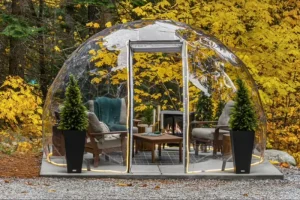
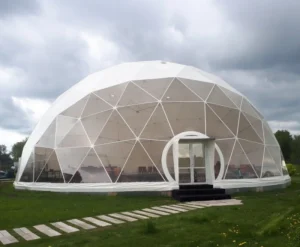
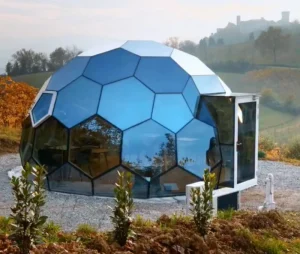
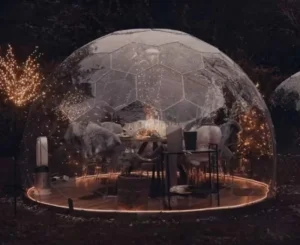
Backyard Tiny Homes have therefore become increasingly popular, offering both space-saving and flexible solutions. Building a small house in your backyard can provide extra living space, or serve as a guest house, office, or meeting area – making it incredibly convenient.
But you might ask: with so many types available, how do I choose the best backyard tiny home for me? This article will provide a comprehensive overview of common backyard tiny home types, analyze their advantages and disadvantages, and offer practical selection guidelines, making it easy and feasible to create a comfortable space in your backyard.
5 Main Types of Backyard Tiny Homes
A Tiny Home isn’t a single concept; it encompasses various building types, each with its own characteristics, uses, and budget requirements. Understanding these differences is the first step to making an informed choice.

1. Shipping Container Tiny Homes
Imagine transforming an ordinary shipping container, through design and renovation, into a fully functional and uniquely styled small house – this is the most appealing aspect of shipping container homes.
The containers themselves are made of weather-resistant steel, offering high structural strength and the ability to withstand transportation, stacking, and harsh environments. Therefore, they have a natural advantage in wind, rain, and impact resistance.
In backyard applications, shipping container homes often give a strong industrial, modern, and highly individual visual impression, making them particularly popular with young families and short-term rental owners.
Advantages:
- Strong structure and high durability
- Highly modular, easy to stack and expand
- Can be transported as a whole unit, fast on-site installation
Disadvantages:
- Original shipping containers have weak insulation and soundproofing
- If insulation is inadequate, it can lead to problems with overheating in summer and cold in winter
Use cases: Suitable for those with limited budgets who want a quick and easy backyard living space, also often used as temporary housing, Airbnb short-term rental units, or studios.
Price reference: $10,000–$30,000 (varies depending on interior decoration, insulation system, and plumbing/electrical configurations)
Overall, shipping container homes are like “building blocks,” allowing for free combination according to needs, making them ideal for those who prefer an industrial or modern minimalist style.

2. Modular Tiny Homes
Modular homes are more like “advanced Lego sets.”
Instead of being built from scratch on-site, the structure, walls, and some interior finishes are completed in a factory and then transported to the site for assembly.
The biggest feature of this construction method is standardized production + customized combination, ensuring stable construction quality while also meeting the needs of different families for spatial layout.
Advantages:
- Short construction period, less affected by weather
- Factory production, more controllable quality and precision
- Flexible floor plan, customizable according to needs
Disadvantages:
- Large module size, higher transportation and lifting costs
- Relatively specific requirements for site access and foundation
Use cases: Very suitable for users who want to move in quickly and have clear needs for interior functional zoning, such as backyard homes requiring separate bedrooms, a complete kitchen, and bathroom.
Price reference: $20,000–$60,000
The advantage of modular homes is “what you see is what you get.” You can clearly plan your living space during the design phase, but you also need to consider transportation routes and installation conditions in advance.

3. Wood Frame Tiny Homes
Wood frame tiny homes are a classic and timeless choice.
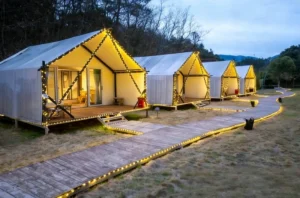
They usually give a warm, natural, and environmentally friendly feeling, and can blend well into gardens, forests, or rural-style backyard spaces.
Compared to metal structures, wood has advantages in terms of insulation and living comfort, especially suitable for long-term living.
Advantages:
- Natural appearance, diverse style options
- Good insulation performance, comfortable living experience
- Relatively flexible for future renovations and expansions
Disadvantages:
- Higher requirements for fire and moisture protection
- Higher long-term maintenance costs than steel structures
Use cases:Suitable for backyard homes that pursue a warm atmosphere and natural style, especially suitable for long-term family use or vacation-style living.
Price reference:$15,000–$50,000
Like the log cabins you see in the countryside or resort areas, these Tiny Homes are not only living spaces but also an embodiment of a lifestyle.

4. High-End Light Steel or Steel Structure Homes
Steel structure tiny homes represent modern architectural concepts.
They use a steel frame as the main structure, which can be combined with glass, aluminum panels, or composite wall systems. The overall appearance is clean and neat, with strong lines. This structure excels in safety and durability, making it particularly suitable for families who need protection against wind and snow and require a longer lifespan.
Advantages:
- Long structural lifespan, strong wind and snow resistance
- Strong modern aesthetic, easy to create large areas of natural light
- Fast construction speed, stable structure
Disadvantages:
- Relatively high initial cost
- Insulation system requires additional design
Use cases: Suitable for backyard living spaces or detached functional rooms for those who prefer a modern style, strong durability, and long-term use.
Price reference: $25,000–$70,000
Steel-framed tiny homes are like “mini skyscrapers” in the backyard, stable and reliable, perfect for families who prefer a simple, modern architectural language.

5. Dome Tent
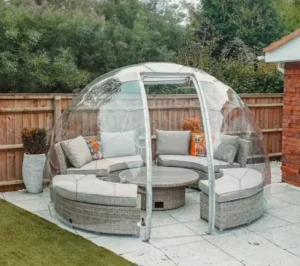
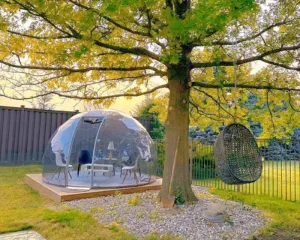
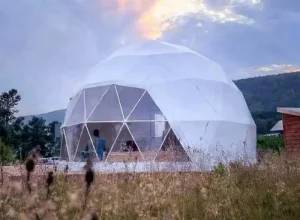
If you’re looking for a temporary or semi-permanent backyard solution, a dome tent is a very attractive option.
Especially transparent or translucent models, which are visually striking and can instantly transform your backyard into a high-end campsite or event space.
Advantages:
- Fast setup, low foundation requirements
- Unique appearance, high space utilization
- Removable and portable, highly flexible
Disadvantages:
- Limited basic living facilities
- Requires additional insulation and amenities for long-term use
Use cases: Suitable for temporary backyard accommodation, party spaces, reception rooms, or luxury camping experiences.
Price reference: $3,000–$10,000+
The core value of a dome tent lies in the experience. While not suitable as a long-term residence, adding flooring, insulation, and furniture can significantly improve comfort.
Classified by Mobility and Use
When choosing a Tiny Home, in addition to the type, mobility and use are also essential factors to consider. Because backyard space is limited, some houses need to be fixed, while others require flexibility and mobility.
1. Fixed Tiny Home
Fixed houses are installed on a permanent foundation, making them more stable and durable, suitable for long-term living or rental.
Advantages: Stable, safe, suitable for long-term use
Disadvantages: Long construction period, requires approval and permits
Price reference: $20,000–$70,000
2. Mobile Tiny Home
Trailer chassis or modular design, can be moved at any time. Advantages: Flexible relocation, no permanent foundation required
Disadvantages: Size limited by road transport, some functions are limited
Price Reference: $15,000–$50,000
3. Functional Use Classification
Residential type: Includes kitchen, bathroom, and bedroom, suitable for long-term living
Office/Studio: Focuses on storage, natural light, and desk/chair arrangement
Guest room/Airbnb: High requirements for comfort and privacy
Multi-functional: Can be used as a guest room, office, gym, or activity space
How to Choose the Best Backyard Tiny Home for You
Choosing a Backyard Tiny Home is not a casual decision. Many seemingly good options, when actually implemented, turn out to be unsuitable for one’s lifestyle. Therefore, starting from your needs before looking at products is more effective.
The following dimensions will largely determine your final choice.
Clarify the purpose: What role do you want your Tiny Home to play?
The role your Tiny Home plays in your backyard determines its configuration standards.
If it’s a long-term living space, the water and electricity systems, insulation performance, and privacy must be prioritized; while if it’s just a guest room or Airbnb, the guest experience, comfort, and visual appeal become more important.
For office or studio use, the residential attributes can be appropriately de-emphasized, but natural light, quietness, and spatial layout will directly affect efficiency. The clearer the purpose, the clearer the trade-offs in structure and budget will be.
Budget planning: Determine the range first, then make a choice
Different types of Backyard Tiny Homes have significant price differences.
From dome tents and shipping containers to wood structures, modular structures, and light steel structures, the budget often changes exponentially.
A more realistic approach is to first set a budget range that you can accept, and then choose the most suitable option within that range, rather than continuously increasing investment for a particular design. Generally speaking, structural safety, insulation, and basic functions are far more worthy of priority investment than exterior decoration.
Site conditions: Your backyard will help you filter out half of the options
The conditions of your backyard itself are often more “decisive” than you might think.
The available area, whether the ground is level, and whether there are sufficient transportation and installation channels will directly limit the available options. If the access is narrow, large modular homes may not be practical; however, a backyard with good ground conditions and ample space allows for consideration of more complete, fixed structures. Assessing site conditions in advance can effectively avoid rework and additional costs later on.
Style Matching: Integrating Your Tiny Home into the Backyard Environment
A Tiny Home is not an isolated building; it will be a long-term feature in your backyard.
Whether the style is harmonious directly affects the overall appearance and user experience.
Modern homes are better suited to light steel or modular structures; industrial style enthusiasts often prefer converted shipping containers; while a natural garden environment is more easily integrated with wooden cabins. Transparent dome designs emphasize the experience and visual impact, suitable for those who want their backyard space to be more distinctive.
Considering Mobility
Many people overlook future changes when planning.
Fixed Tiny Homes have advantages in stability and long-term use, but once built, the scope for adjustments is relatively limited; while mobile solutions have limitations in size and configuration, they offer more flexibility for the future.
If you are still unsure about your long-term plans, choosing a mobile solution is often a safer transitional option.
Budget Considerations
Type | Price Range | Applicable Scenarios |
Container Conversion Home | $10,000–$30,000 | Quick installation, suitable for short-term or long-term living |
Modular Home | $20,000–$60,000 | Highly customizable, quick assembly |
Wooden Cabin | $15,000–$50,000 | Natural and warm style, flexible modification |
Steel Structure Cabin | $25,000–$70,000 | Modern and durable, ideal for long-term living |
Dome Tent | $3,000–$10,000+ | Temporary events, glamping, or guest room experience |
This table can help you quickly compare the budget range and applicable scenarios of different types of Tiny Homes.
If your backyard area is limited and you want to create a flexible and aesthetically pleasing guest room space, a transparent dome tent or a mobile container is usually a lighter and less stressful option. If you plan to live there long-term and prefer a modern, minimalist architectural style, light steel frame structures or modular Tiny Homes often offer comfort and stability closer to traditional houses.
Summary
Backyard Tiny Homes are a flexible and practical way to expand your living space, but when choosing one, you must consider the type, mobility, purpose, budget, and actual backyard conditions.
- Fixed structures are suitable for long-term living or rental.
- Movable structures are suitable for short-term use and flexible relocation.
- Dome tents are suitable for temporary accommodation or event spaces.
If you want to build a safe, stable, comfortable, aesthetically pleasing, and customizable Tiny Home in your backyard, consider the various backyard building solutions offered by Gaxdome, including PVC dome tent, Clear doem Tents, and high-end Glass Domes. Professional suppliers can not only provide installation and design solutions but also help you choose the right model based on your budget and backyard conditions, allowing your Tiny Home to be built quickly.