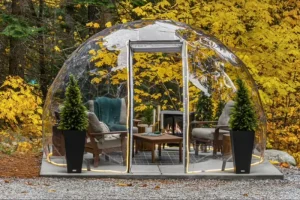
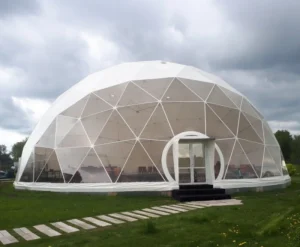
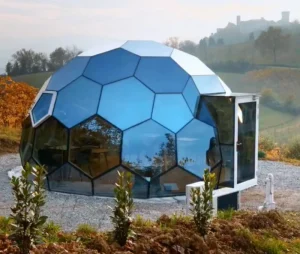
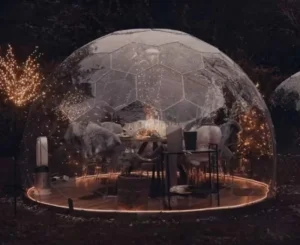
In recent years, geodesic dome greenhouses have rapidly gained popularity worldwide. According to Greenhouse Grower Magazine’s 2024 market report, approximately 22% of new modern greenhouse projects utilize a spherical or hemispherical design. Geodesic domes, in particular, have attracted significant attention for their structural stability and energy efficiency, up to 35% of traditional greenhouses.
However, there remains a gap between ideal and reality. Many users have discovered after actual construction or operation that these greenhouses are not perfect. Complex installation structures, insulation difficulties, and temperature control challenges caused by diurnal temperature fluctuations often lead to additional maintenance and management costs.
This article will combine scientific and practical perspectives to deeply analyze the geodesic dome greenhouses disadvantage and provide feasible solutions based on engineering and agricultural management for each issue.
Whether you’re planning a personal backyard greenhouse or a commercial growing space, this article will help you avoid risks and build a more efficient and stable dome greenhouse system.
6 Disadvantages of a Geodesic Dome Greenhouse and Their Solutions
The key to successfully managing a dome greenhouse is to anticipate potential problems and prepare appropriate solutions.
1. Complex Structure, Construction and Assembly Challenges
Assembling a geodesic dome is not as simple as assembling a regular greenhouse. A geodesic dome is composed of countless triangular panels and multi-angled connection points (hubs). This requires extremely precise measurement and positioning during construction; any slight deviation can cause subsequent panel installation failure.
For DIYers accustomed to traditional rectangular greenhouses, the dome’s geometry and complex connection system are very unfriendly.
This complexity significantly increases initial construction time. Custom sizes or non-standard designs require higher skills from on-site workers and DIYers, further increasing the difficulty and potential cost of initial construction.
Solution:
- Use high-precision prefabricated components: Prefer suppliers that provide complete prefabricated kits. The rods and connectors in these kits are factory-cut, drilled, and numbered with high precision.
- Choose a modular design: Some advanced dome designs utilize a modular connection system, significantly simplifying on-site installation, even requiring no special tools.
- Hiring a professional installation team: For those with ample budgets, hiring a professional team experienced in dome greenhouse installation can ensure structural precision and airtightness, saving significant time and rework.
2. Poor sealing and difficulty isolating heat loss
The structural characteristics of domes result in numerous joints and connection points. The edges of each triangular panel are potential leak points.
Compared to the large panels of traditional greenhouses, the polygonal structure of dome greenhouses makes maintaining airtightness a significant challenge.
Small gaps at these joints can easily lead to heat loss (the “cold bridge” effect), significantly reducing insulation effectiveness in winter and requiring more energy for heating. This can also allow moisture to penetrate, shortening the lifespan of the frame.
Solution:
- Choose high-quality panel materials: Use double- or triple-layer hollow polycarbonate panels, whose internal air layer provides excellent thermal insulation.
- Use advanced sealing technology: All joints and panel edges must be sealed with high-quality, UV-resistant, temperature-resistant, professional-grade sealing strips (such as EPDM rubber gaskets) or structural adhesive.
- Enhance overall airtightness: Applying an internal insulation film as a secondary seal can significantly enhance airtightness and further reduce energy consumption.
3. Low space utilization
The interior of a dome is a continuous curved structure, lacking traditional upright walls and right-angled corners. This makes it difficult to arrange standard rectangular planting racks, workbenches, or nursery beds.
Standard gardening equipment cannot fully utilize every inch of the dome’s space, especially around the edges. This can reduce space utilization and make planting planning more complex and inefficient.
Solution:
- Use a hanging system: Leverage the dome’s strong frame to install hanging planters or vertical planting systems to maximize the upper space.
- Customize tiered planting racks: Prefer curved, height-adjustable tiered planting racks, or customize planting beds that match the dome’s edges to maximize the curved structure.
- Modular Architecture: Use modular shelves that can be freely combined and angled to meet the layout needs of different plants and seasons.
4. Difficulty in Temperature Control and Unstable Environment
The dome shape offers advantages, such as efficient heat collection and a low surface-to-volume ratio, but it also has disadvantages.
During periods of intense sunlight, the interior can overheat quickly (the “hotspot effect”). At night, heat can quickly dissipate through numerous connection points, leading to large internal temperature fluctuations.
Severe temperature fluctuations are detrimental to the growth of most plants. High temperatures can cause burns or excessive growth; low temperatures can stunt growth and even cause frostbite. An unstable environment increases the risk of crop diseases and pests.
Solution:
- Install an Automatic Ventilation System: Ensure adequate top ventilation windows and bottom air intakes are installed. It is best to use temperature-sensitive hydraulic or electric automatic ventilation windows to ensure precise control even when the greenhouse is unattended.
- Heat Storage System: Place buckets, stones, or soil beds inside the greenhouse to utilize their significant thermal capacity to absorb excess heat during the day and slowly release it at night, thereby stabilizing the temperature.
- Use sunshades or coatings: In summer or in areas with intense sunlight, install exterior sunshades or apply sprayable heat-reflective coatings to reduce heat ingress.
- Smart temperature control systems: Introduce specialized temperature and humidity sensors and smart control systems to coordinate ventilation, shading, and heating.
5. Relatively high initial costs
Due to the structural characteristics of dome greenhouses, the frame rod dimensions and connectors require precise calculations and custom manufacturing. This results in higher material and manufacturing costs than traditional rectangular or tunnel greenhouses that use standard straight rods and simple connections.
The higher initial purchase and construction costs are not suitable for gardeners on a limited budget, and it may take longer to recoup the investment through energy savings.
Solution:
- Focus on long-term benefits: Recognize the dome’s structural stability in extreme weather and its long-term energy savings (typically over 30% compared to traditional greenhouses), and view it as a long-term investment.
- Choose economical materials: While ensuring strength, choose economical materials such as galvanized steel pipe or PVC frames (suitable for small domes) rather than expensive aircraft-grade aluminum alloys.
- Phased investment: Initially, you can purchase the basic framework and then gradually upgrade to more advanced panels, automatic ventilation, and intelligent control systems.
6. Limited expansion and renovations later
A dome is a structurally complete geometric structure, its unique shape defining its integrity. Once built, adding an auxiliary workshop or storage area, or expanding the greenhouse laterally, is much more difficult than with a traditional rectangular structure.
Adapting to future horticultural needs, such as expansion or functional areas, is difficult, and the design lacks flexibility.
Solutions:
- Initial design with interfaces: When initially selecting or customizing the dome, include interfaces or modular connection systems for connecting rectangular auxiliary structures.
- Choose a modular, connectable dome: Some manufacturers offer “cluster dome” systems that can be connected together, allowing you to add new dome units as your needs grow.
- Utilize an external, independent structure: Place the workspace or storage area in a separate rectangular shed adjacent to the greenhouse, keeping the interior of the dome solely for growing.
Why is the Geodesic Dome Still Worth Buying?
Despite their numerous drawbacks, geodesic dome greenhouses remain popular worldwide. This is due to their structural and ecological advantages that traditional greenhouses lack.
First, they offer extremely efficient air circulation and light transmission. The spherical structure allows sunlight to enter from all angles, avoiding shadows and improving photosynthesis efficiency.
Second, the dome shape evenly distributes stress, making it able to withstand extreme weather conditions such as strong winds and snow. Compared to traditional greenhouses, they offer structural stability and a longer service life.
Furthermore, the aesthetic value of geodesic dome greenhouses cannot be ignored. They are not only functional buildings but also visual focal points, adding a unique, modern touch to farms, gardens, and ecological projects.
Overall, despite technical and economic challenges, with appropriate design and scientific management, dome greenhouses remain a worthwhile investment in future-oriented agricultural architecture.
How to Extend the Lifespan of a Geodesic Dome Greenhouse?
To maximize the lifespan and performance of a dome greenhouse, routine maintenance is crucial:
Regularly inspect seals and joints: At least twice a year (at the end of each season), inspect all joints and seals for signs of deterioration, cracking, or loosening. Replace or tighten them promptly to prevent water seepage.
Clean panels to maximize daylight: Regularly clean exterior panels, especially during the winter months when sunlight is low, to ensure maximum light transmission.
Inspect the ventilation system: Ensure the hydraulic rods or motors for automated ventilation windows operate smoothly and are not blocked by dust, ice, or snow.
Internal environmental monitoring: Continuously monitor temperature and humidity to adjust ventilation, shading, and heating systems based on plant needs.
Gaxdome: Dome Solutions for Real-World Growers
If you’re looking for a geodesic dome greenhouse that incorporates all of the above strategies into its product design and is committed to addressing construction and maintenance challenges, learn more about Gaxdome.
Gaxdome specializes in high-quality, easy-to-assemble geodesic dome solutions. Our expertise encompasses the entire process, from design and high-precision production to installation guidance. We utilize patented connectors and specialized panel sealing technology to overcome the most challenging leaks and assembly challenges associated with dome greenhouses.
Our extensive technical experience in greenhouses, dome accommodations, and commercial display spaces allows us to provide our customers with reliable, durable, and energy-efficient products.
Conclusion
A geodesic dome greenhouse is a highly profitable investment, providing a stable, energy-efficient, and aesthetically pleasing growing environment.
By thoroughly understanding the six potential challenges—from complex construction to subtle temperature control issues—and implementing our expert strategies, you’ll be able to make informed decisions and ultimately enjoy a highly efficient, long-lasting dome greenhouse.
Don’t let these drawbacks deter you. By choosing the right manufacturer and design, you can fully leverage the powerful advantages of a dome and realize your year-round gardening dreams. Contact us today to begin your dome greenhouse journey!
Want to learn more about custom dome greenhouse designs or pricing options?
Contact us today to plan your ideal dome greenhouse space.