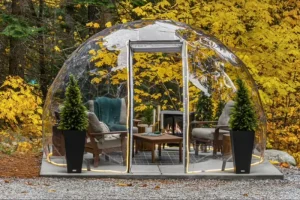
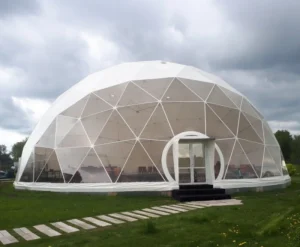
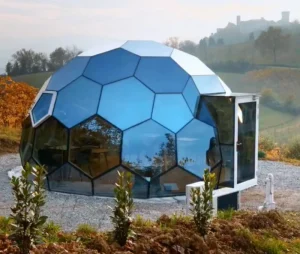
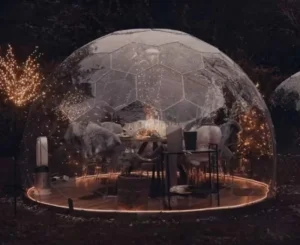
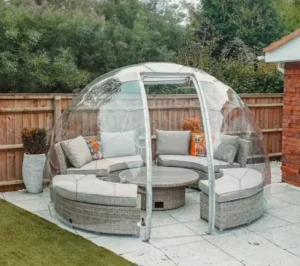
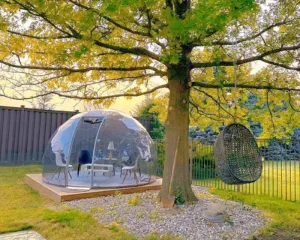
PVC igloo domes, with their unique spherical appearance and translucent panoramic view, are becoming a new favorite for outdoor living and commercial spaces. Whether you want to create a cozy lounge corner in your own backyard, add a unique charm to your cafe, or even plan a unique outdoor event, choosing a PVC igloo dome with the right size and specifications is the first step towards success.
In this article, we will discuss the common sizes and specifications of PVC igloo domes, and provide you with a detailed shopping guide to help you make the most informed decision based on their own needs.
PVC igloo dome common size and applicable scene analysis
Choose the right PVC igloo dome, the first step is to understand its size specifications and use of the scene. Usually, we are divided into different models by diameter, the larger the diameter, the more spacious the internal space, the overall height will also increase accordingly, bringing a stronger sense of space.
Small domes (about 3m-4m in diameter) are suitable for environments with limited space, such as balconies, small courtyards or roof decks. Common applications include personal meditation corners, reading areas, children’s play areas or stargazing houses for couples. Capacity: 2-4 persons.
Medium-sized domes (approx. 5m-7m in diameter) are more spacious and can be used for daily relaxation as well as supporting small gatherings. Ideal for family dinners, small coffee boxes, greenhouses or independent studios. Capacity: 6-10 people.
Large domes (8m-10m in diameter and above) are extremely spacious, suitable for luxury camping, outdoor weddings, event displays, etc. They can also be used to create multi-functional spaces. Capacity: more than 15 people (depending on the internal layout).
Coverage: A Measure of Actual Usable Space
The coverage area of a dome, usually measured in square meters (m2), is a key indicator of the actual usable space inside. This value directly determines how much furniture and equipment you can place inside the dome and how many people you can comfortably accommodate. For example, a dome with a diameter of 6m will cover approximately 28.26m2 in the circular area at the bottom, which provides a clear reference for planning your interior layout.
Material thickness and characteristics: a guarantee of quality and durability
The “specifications” of PVC igloo domes do not only refer to the size, but also to the quality of the materials used. This is directly related to the durability, safety and experience of the dome.
Thickness of PVC film: The thickness of common PVC film is usually between 0.6mm and 0.9mm, of course, there are also thicker options. Generally speaking, the thicker the film, the better the durability, tear resistance and sound insulation.
Key Characteristics of PVC Films:
- Transparency: High-quality PVC films should have excellent light transmission, ensuring that you enjoy a clear, unobstructed panoramic view inside your dome.
- Ultraviolet (UV) Resistance: Quality PVC films are specially coated with a UV-resistant coating. This prevents the material from deteriorating, yellowing, or even becoming brittle under prolonged sunlight exposure, thus extending the life of the dome.
- Flame Retardant: Especially for domes used for commercial purposes, the flame retardant rating is a very important safety consideration. Materials that meet international standards (e.g. DIN4102 B1, M2) can effectively reduce the risk of fire.
- Waterproofing: Ensure that the PVC membrane itself, as well as all seams, have excellent waterproofing properties to prevent rainwater leakage and keep the interior space dry.
- Temperature Resistance: A good PVC membrane should be able to withstand a wide range of climatic conditions, typically maintaining its physical properties over a wide range of temperatures from -30∘C to +70∘C.
- Frame Material: The dome’s skeleton is the cornerstone of its stability.
- Hot-dip galvanized steel tubing: This is the most common frame material and is hot-dip galvanized to provide excellent rust resistance and high strength for durability.
- Aluminum: Aluminum frames, on the other hand, are known for their lightweight and excellent corrosion resistance, but usually cost relatively more. When choosing, you need to pay attention to the tube diameter and wall thickness of the frame, these details directly determine the overall structural stability of the dome and its ability to resist high winds and heavy snow.
Type of structure: solid geodesic dome design
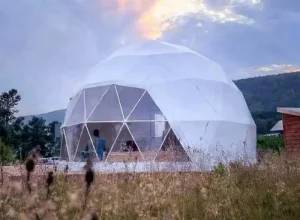
Although we call it a “PVC igloo dome”, the structural design of its interior is usually based on the principle of the **Geodesic Dome**. This structure consists of a series of triangular meshes, precisely geometrically calculated to provide high stability and uniform load-bearing capacity throughout the dome. This design effectively distributes external pressures, allowing it to perform well in the face of natural challenges such as wind and snow.
Choosing the Right PVC Igloo Dome for You: Key Factors to Consider
After knowing the size and specifications of the dome, the next step is to combine this information with your actual needs and make a careful selection.
1. Define the main purpose and functional requirements
First of all, you need to clearly define the main purpose of buying a PVC igloo dome.
- Recreation: For personal or family use—like stargazing, reading, or meditation—a small to medium dome is usually sufficient. Prioritize transparency, comfort, and how well it blends with the environment.
- Commercial Use: If the dome is for a café, outdoor restaurant, Airbnb, or event rental, consider factors like space for furnishings, guest comfort (heating, cooling), local building codes, and alignment with your brand. Medium to large domes are typically preferred.
- Greenhouse: For gardening or plant cultivation, ensure the dome offers good light transmission and ventilation (like operable windows or exhaust fans). Humidity control is also essential.
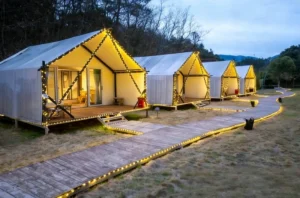
- Glamping: For luxury camping, focus on interior space for beds and bathrooms, comfort, and privacy features like curtains or sunshades.
Site conditions and environmental factors: tailoring to local conditions
The conditions of your installation site and the local climate are important factors that should not be ignored when choosing a dome.
Available Space: Measure your installation area carefully to ensure it can accommodate the dome’s diameter, with extra room for access and maintenance.
Ground Conditions: The dome should be placed on flat, stable ground. If the surface is uneven, consider leveling it or building a platform or foundation.
Climate Factors:
- Wind: In windy areas, choose a dome with strong wind resistance, reinforced framing, and secure anchoring.
- Snow: For snowy climates, select a dome rated for snow load and regularly remove snow buildup.
- Sunlight: In regions with strong sun, UV-resistant PVC is essential. Interior or exterior shades can help prevent overheating.
Budget considerations: living within your means
The budget is the central factor in any purchasing decision.
Product Price: Larger domes, premium materials, and added features will naturally increase the cost. Aim to find the best value within your budget.
Transport & Installation: Big domes may require professional shipping and setup, adding to overall expenses—plan for these in advance.
Maintenance: Consider ongoing costs like cleaning, occasional repairs, and future part replacements when budgeting long-term.
Interior space planning and capacity: putting people first
When choosing a dome size, you need to envision the interior layout and the actual number of people who will be using it in advance.
Interior Layout: Decide what furniture or equipment (e.g., sofas, beds, tables, plant stands) you plan to include. This helps determine the minimum dome size needed for comfort and functionality.
Capacity: Estimate how many people the dome should accommodate. A 3–4m dome suits 2–4 people for casual use, while gatherings of 8–10 people typically require a 6m or larger dome.

Additional features and accessory needs: enhancing the experience
To maximize the functionality and comfort of your dome, there are a number of additional features and accessories you will need to consider.
Ventilation & Openings: Make sure the dome has adequate vents or windows to maintain airflow and prevent stuffiness.
Windows & Doors: Choose styles that suit your needs—zippered doors for convenience, sliding or pivot doors for aesthetics; dormer or panoramic windows for ventilation and views.
Shading & Privacy: Curtains or shades (interior or exterior) help block harsh sunlight and provide needed privacy.
Lighting & Climate Control: Depending on use, consider installing lighting, heaters for cold seasons, or portable AC units for hot weather.
Flooring: To improve comfort and appearance, consider adding wood, composite flooring, or anti-slip mats inside the dome.
Brand and Supplier Reputation: Peace of Mind
Choosing a brand and supplier with a good reputation and professional qualifications is the key to ensuring that you buy a high-quality dome.
Quality Certifications: Reputable suppliers will offer certifications proving their products meet industry or international safety standards—giving you peace of mind.
Clear Product Specs: Trusted brands openly share key details like materials, thickness, wind/snow resistance, so you can fully understand what you’re getting.
Reliable After-Sales Support: Look for suppliers who provide clear installation guidance, responsive technical support, and easy access to spare parts.
Customer Reviews & Case Studies: Real feedback from other buyers helps you gauge product performance and the supplier’s service quality.
Accurate Measurement and Site Planning: The Basis for a Successful Installation
Accurate site measurement and planning are indispensable steps before making a final decision on the size to be purchased.
Measuring the usable area
When taking measurements, it is recommended to use a laser rangefinder to obtain more accurate data, which is especially efficient in larger or irregular spaces. A traditional tape measure will suffice for smaller venues, starting with the length and width of the floor to confirm the actual usable dimensions of the area where the dome is intended to be placed.
If the floor is irregular, use cardboard, string, or lime to mark out the desired circular outline to visually determine if the chosen diameter is appropriate. It is also important to note whether the ground is level, with no significant slopes, puddles or obstructions that could affect stability and comfort.
Consider the Surroundings
As a three-dimensional structure, the vertical space of the dome is equally important and it is advisable to look for obstructions above the build area, such as tree limbs, power lines, canopies, etc., which may limit the height or safety of the dome in use.
Horizontal space also needs to be watched, such as whether walls, railings, green plants or windows of neighboring buildings will block the entrance and exit of the dome or affect the daily access and lighting effect.
In addition, for outdoor structures, drainage needs to be assessed to ensure that water will not be a problem during rainy days.
Sketching
To further confirm the suitability of the space, measurements can be sketched to indicate the predetermined position of the dome, the direction of entrances and exits, and the distance from surrounding objects.
If conditions permit, you can also use design software for simple modeling, such as SketchUp, Planner 5D or Roomstyler, etc., to simulate the effect of the dome’s placement and the arrangement of the interior furniture, which can more intuitively determine whether the spatial layout is reasonable.
Throughout the planning process, it is recommended to reserve an additional 50 cm to 1 meter safety buffer zone around the dome structure, which is convenient for the passage of people, post maintenance and the arrangement of ventilation equipment, lighting and other accessories. Good space reservation not only enhances the user experience, but also helps to extend the service life of the dome.
Through such comprehensive and meticulous measurement and planning, we can not only ensure that the selected dome size fits perfectly with the site conditions, but also provide a solid foundation for the subsequent erection, setup and use.
To summarize
Choosing a PVC igloo dome that is right for you is a comprehensive process. There is no absolute “best” dome on the market, only the “best fit” dome that best meets your specific needs. Before making a decision, be sure to define your core needs, evaluate the site conditions, set a reasonable budget, and consider the additional features required.
By carefully considering the size and specifications of the dome, as well as your own specific needs, you will be able to find the perfect PVC igloo dome that will add a unique touch to your living or commercial space and bring an outdoor experience like no other.