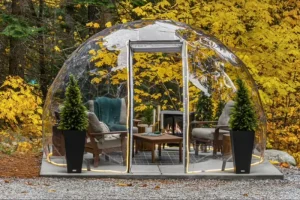
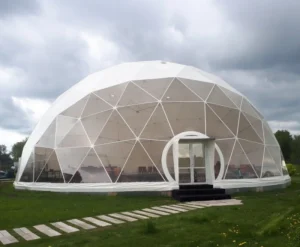
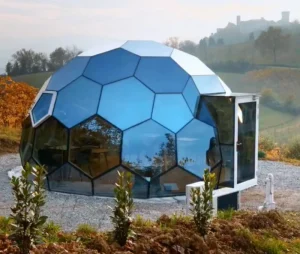
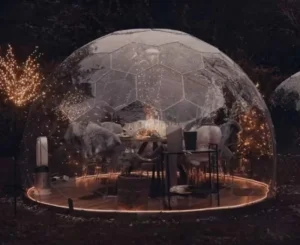
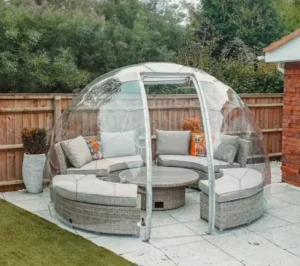
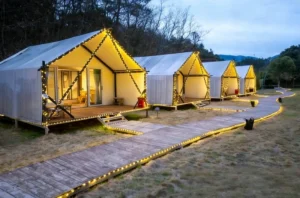
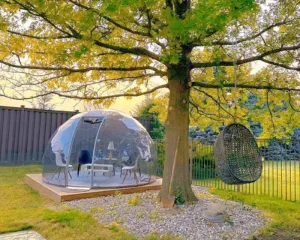
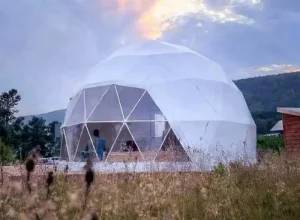
A bubble tent is a transparent dome tent designed for outdoor activities. Typically made of TPU, PVC, or polycarbonate, it allows for a comfortable and intimate experience while camping, glamping, and stargazing. Depending on size, material, and features, bubble tents typically cost between $300 and $8,000.
Why Are Bubble Tents So Popular?
Search data shows that searches for “bubble tent” have increased by 120% over the past three years, and the hashtag #bubbletent has been viewed over 1.5 million times on Instagram. Bubble tents are so popular because they are cost-effective and have a wide range of uses:
- Backyard Leisure – According to the Outdoor Living Research 2024 survey, over 43% of American households are choosing to install a small bubble tent in their backyard to create a family leisure space.
- Outdoor Camping/Glamping – According to Statista, the global glamping market is expected to exceed $6.5 billion by 2028, with bubble tents accounting for over 15% of this market. Tourist Attractions and B&Bs – Booking.com data shows that B&Bs featuring “transparent bubble houses” have a 37% higher booking rate than standard wooden cabins.
- Commercial Restaurants – More and more cafes and restaurants are using bubble houses to create “influencer dining experiences,” increasing customer traffic and exposure.
Transparent bubble houses, in particular, have become a top choice for high-end camping, scenic B&Bs, and commercial spaces due to their unique visual appeal and playability.
Common Bubble Tent Types and Market Selection Guide
Before choosing a bubble tent, you need to first understand your specific needs. Bubble tents on the market fall into three main categories: inflatable bubble houses, PC rigid bubble houses, and modular bubble houses. They vary in material, installation methods, usage scenarios, and price.
If you simply want to create a small leisure space in your backyard or at a campsite, an inflatable bubble house is the best choice.
These bubble houses are typically made of TPU or PVC film, are very lightweight, and are easy to carry and install. They can be quickly set up with just a blower, making them ideal for weekend camping, family gatherings, or impromptu parties. Inflatable bubble houses cost between $300 and $1,500 internationally, offering excellent value for money.
If you’re looking for a more durable bubble tent with long-term use, a PC rigid bubble house might be more suitable. These bubble houses, made of polycarbonate (PC) or acrylic, offer greater weather resistance and stability, and don’t require a constant air supply like inflatables.
Their visually appealing, transparent, and high-quality design make them popular in high-end B&Bs, scenic area observation decks, and internet-famous cafes. While the investment is higher, the price of a PC rigid bubble house generally ranges from $2,500 to $8,000, offering a lifespan of 5 to 10 years, making it suitable for long-term operation.
Finally, if you’re planning a large-scale, unique campsite, resort, or high-end commercial space, modular bubble tent are the best solution. Combining PC panels with a metal frame, these bubble houses can be expanded and combined with different modules, allowing for flexible design of various room layouts, and even creating an entire “bubble house community.” Due to the high degree of customization in cost and configuration, modular bubble houses start at around $4,000, with high-end options reaching over $20,000.
In short, if you’re an individual user, we recommend choosing an inflatable bubble tent. If you’re a B&B owner or campground operator, a PC rigid bubble house or a modular bubble house offers greater commercial value and long-term return on investment.

Bubble Tent Price Analysis: How Much Does One Cost?
To help you choose more clearly, below are detailed price references for three types of bubble tents in the international market:
1. Inflatable Bubble Tent Price Guide
Diameter | Capacity | Basic Model Price | Premium Model Price | Recommended Use |
3 m | 2 people | $300 | $450 | Backyard relaxation, light camping for couples |
4 m | 3–4 people | $500 | $800 | Small family outdoor gatherings |
6 m | 5–6 people | $850 | $1,200 | Group camping, brand promotion events |
8 m | 8 people | $1,200 | $1,600 | Parties, social activities |
2. PC Hard-Shell Bubble Tent Price Guide
Diameter | Capacity | Basic Model Price | Premium Model Price | Recommended Use |
3 m | 2–3 people | $2,500 | $3,000 | Private backyard, luxury relaxation areas |
4 m | 3–4 people | $3,500 | $4,500 | Boutique homestays, property upgrades |
6 m | 5–7 people | $5,500 | $7,000 | Main units for luxury camping sites |
8 m | 8–10 people | $7,000 | $8,500 | Commercial dining, resort customization |
3. Modular Bubble Tent Price Guide
Modules / Area | Estimated Area | Basic Model Price | Premium Model Price | Recommended Use |
Single module (~12 ㎡) | ~12 ㎡ | $4,500 | $5,800 | Boutique glamping tents, small backstage areas |
Double module (~24 ㎡) | ~24 ㎡ | $7,800 | $10,500 | Homestay suites, leisure cabins |
Triple module (~36 ㎡) | ~36 ㎡ | $11,000 | $14,500 | High-end private retreats, themed homestays |
Four+ modules (≥48 ㎡) | ≥48 ㎡ | $15,000 | $20,000+ | Commercial spaces, cafés, exhibition halls |
Usage Recommendations
For personal relaxation:
Opt for 3m–4m inflatable bubble tents for an affordable, easy-to-install choice.
For business operators:
Choose PC hard-shell or modular bubble tents for long-term rental, resort operations, or unique experience setups.
Average ROI period: 6–18 months, depending on occupancy rates and operational strategy.

What Should You Consider Before Buying a Bubble Tent? The Ultimate Buying Guide
If you’re considering buying a bubble house, whether for family camping, backyard stargazing, or to invest in a B&B or create a popular campsite, you might be overwhelmed by the sheer variety of products and prices. Don’t worry, we’ve compiled six key factors to consider before purchasing a bubble tent to help you make a more confident decision.
1. Structural Safety: ⭐⭐⭐⭐⭐
While a bubble tent may appear lightweight, structural stability is crucial. Especially if you plan to install it in a high-wind area or near the sea, wind resistance is a top priority.
Why it’s important: Structural instability not only affects its lifespan but also poses potential safety risks. How to build: Choose a bubble house with a high-strength aluminum alloy or galvanized steel frame, with a wind resistance rating of at least 8. For temporary camping, an inflatable bubble house is sufficient; however, for long-term commercial operations, a PC rigid or modular bubble house is more reliable.
2. Material and Weather Resistance: ⭐⭐⭐⭐☆
Different materials directly affect the lifespan and user experience of the bubble tent:
TPU: Lightweight and highly transparent, but with a relatively short lifespan (2-3 years), suitable for short-term camping or DIY construction.
PVC: Better heat resistance and low cost, but prone to degradation in summer sun.
PC/Acrylic: Offers the best stability and weather resistance, resisting UV rays, rain, and snow, with a service life of 5-10 years.
Recommendation: If the bubble house will be stored outdoors for an extended period, especially in direct sunlight or high humidity, PC or acrylic with a UV protective coating is preferred.
3. Ventilation and Moisture Prevention: ⭐⭐⭐⭐☆
Many first-time bubble tent buyers encounter the same issues: fogging, stuffiness, and humidity. This is because the bubble house is too airtight, preventing air circulation and allowing moisture to accumulate.
Why it’s important: Prolonged moisture can easily breed mold, affecting comfort and health.
How to: Choose a bubble tent with a built-in automatic ventilation system or one that can be retrofitted with a fresh air system. If it’s an inflatable bubble house, it’s best to include ventilation holes during installation.
4. Installation Method: ⭐⭐⭐⭐☆
The installation method will directly impact your budget and user experience.
DIY inflatable bubble houses: Suitable for individual builders, generally can be set up in under 30 minutes and are easy to operate.
PC rigid bubble houses/modular assembly: Require on-site installation by a professional team, and transportation and construction time may add additional costs.
Suggestion: Before placing an order, be sure to ask the manufacturer whether on-site installation is available, whether transportation is included in the price, and whether the bubble house is suitable for your terrain. Especially for modular bubble houses, if installed in mountainous areas or by the sea, the construction period may be longer than you expect.
5. After-Sales and Warranty: ⭐⭐⭐⭐⭐
Bubble tent are large outdoor equipment, subject to the elements and transportation risks, making after-sales and warranty services crucial.
Why it’s important: If the membrane material is damaged, the blower is broken, or the frame is deformed, repair costs can be very high if the manufacturer doesn’t provide spare parts.
How to:
Prefer direct sales from the manufacturer to avoid multiple agents.
Require the manufacturer to provide at least a 1–3 year warranty and clearly define responsibilities for international shipping.
For commercial projects, it’s recommended to choose brands with overseas warehouses or local service points to reduce maintenance costs.
6. Budget and Return on Investment: ⭐⭐⭐⭐☆
Many people who buy bubble houses either chase the lowest price or blindly purchase high-spec designs. In reality, the appropriate budget should be calibrated based on the intended use:
For home use: A budget between $500 and $1,500 is sufficient for stargazing, camping, and family fun. Commercial Projects: Depending on the site size and expected return on investment, the recommended budget is $5,000-$20,000+.
Tip: If you plan to use your bubble house for high-end camping or as an influencer photo spot, it’s recommended to choose a high-end package with furniture, power, and air conditioning to achieve a faster return on investment.
Bubble Tent Usage and Maintenance Guide
- Cleaning and Maintenance: TPU/PVC models: Use warm water and a neutral detergent. Avoid using corrosive products containing alcohol or strong acids or bases.
- PC models: Gently wipe with a soft-bristled brush and a specialized plastic cleaner to prevent scratches.
- Winter Protection: In cold climates, it’s recommended to add insulation or use an electric heater to prevent the membrane from hardening.
- Blower and Seals: Users of inflatable models should regularly check the blower function and the sealing of the interfaces to prevent leaks that could affect the user experience.
Bubble Tent FAQ
Is a bubble tent safe in windy weather?
When wind speeds are below 50 km/h, a structurally stable bubble tent is safe to use. In higher wind speeds, it is recommended to use anchors, sandbags, or heavy objects to secure it.
Can bubble tents be used in winter?
Yes. PC rigid bubble tents are stable in temperatures as low as -20°C. Inflatable bubble houses are recommended to be used with a heater.
How long does a bubble tent last?
Bubble tents made of different materials have different lifespans. If you purchase an inflatable bubble house (TPU/PVC), the lifespan is approximately 1–3 years; a rigid PC bubble house has a lifespan of approximately 5–10 years. Modular bubble houses, if properly maintained, can last up to 10–15 years.
Does a bubble tent installation require a permit?
Personal backyards generally don’t require one. Commercial use should consult your local building/planning department, especially for public commercial spaces.
Create Your Dream Dubble Tent Space with Gaxdome
Gaxdome specializes in the design and production of transparent bubble tent. Whether you’re looking for a romantic backyard retreat, a unique B&B, a scenic campground, or a commercial dining experience, we can provide customized and professional solutions.
Contact Gaxdome today for a free quote. Let’s create unforgettable outdoor memories for your users and guests!