Introduction
In the field of modern architecture, dome structures have attracted many designers and architecture enthusiasts with their unique aesthetic value and functionality. There are two main types of domes: grid domes and monolithic domes. This report will explore the characteristics, advantages and disadvantages of these two dome structures and their applicable scenarios to help readers make a wise choice.
Grid dome: structural principles and characteristics
What is a grid dome
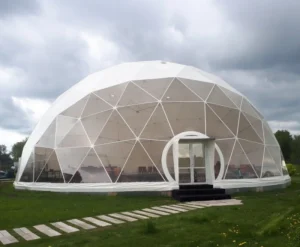
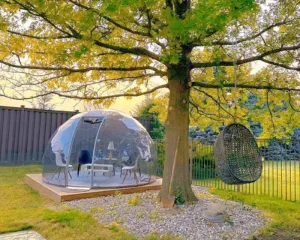
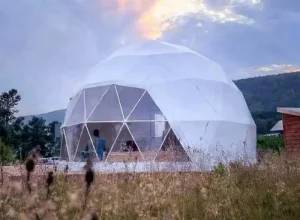
A grid dome is a spherical structure composed of multiple triangular faces arranged according to specific geometric rules to form an outer shell that approximates a sphere. This design is derived from the geodesic principle, which is the shortest path between two points on the earth’s surface, hence the name “geodesic dome”. A grid dome is usually composed of a frame structure made of lightweight materials, including steel, aluminum or PVC.
The design of a grid dome has many significant advantages:
Excellent structural strength: The triangular geometry is naturally stable, allowing the grid dome to withstand large pressures and tensions. This structure can evenly distribute the load at each node, thereby improving the stability of the overall structure.
High material efficiency: Due to its structural characteristics, the geodesic dome is able to achieve a larger span with less material, which can reduce the material usage by about 30-50% compared to traditional building structures.
Lightweight: The lightweight characteristics of the geodesic dome make it an ideal choice for projects that need to minimize the foundation load, especially for temporary or short-term use projects.
Geodesic domes are suitable for a variety of scenarios:
Temporary or short-term use projects, such as exhibition centers, temporary shelters, etc.
Projects that require large spans and column-free spaces, such as greenhouses, stadiums, etc.
Projects that pursue unique aesthetic values, such as art centers, modern buildings, etc.
Monolithic dome: structural principles and characteristics
What is a monolithic dome
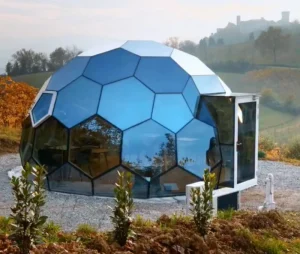
A monolithic dome is a dome made of a single material or structural system, usually using materials such as concrete, steel or glass. This dome design emphasizes the continuity and integrity of the whole, and usually has a large span and height.
Structural advantages of monolithic domes:
Excellent durability and stability: The continuous structure of the monolithic dome makes it highly durable and stable, and can resist various natural and man-made damage.
Low maintenance requirements: The structural design of the monolithic dome makes it require less maintenance, especially the dome built with high-quality materials, which can be used for a long time without frequent repairs.
High security and protection performance: The closed structure of the monolithic dome provides good security and protection performance, and can effectively resist natural disasters such as fire and earthquake.
Applicable scenarios of monolithic domes:
Projects that pursue long-term durability and low maintenance requirements, such as data centers, civil air defense projects, etc.
Projects that require high security and protection performance, such as museums, archives, etc.
Projects that pursue a sense of modernity and technology, such as science and technology museums, airports, etc.
Choose the right dome type
Budget is an important consideration when choosing a dome type:
Initial construction cost: The initial construction cost of the grid dome is usually lower than that of the monolithic dome, especially for small-scale projects.
Long-term maintenance cost: The long-term maintenance cost of the monolithic dome is usually lower than that of the grid dome, especially for long-term projects.
Comprehensive cost-effectiveness: It is necessary to comprehensively consider the initial construction cost and long-term maintenance cost to choose the most cost-effective dome type.
Maintenance requirements
Maintenance requirements are another important consideration when choosing a dome type:
Grid domes have higher maintenance requirements and require regular inspection and maintenance, especially for connection points and sealing parts.
Monolithic domes have lower maintenance requirements, especially those built with high-quality materials, which can be used for a long time without frequent repairs.
Aesthetic value
Aesthetic value is also a factor to consider when choosing a dome type:
Grid domes have a unique geometric beauty, which is suitable for projects that pursue a modern and technological feel.
Monolithic domes have simple lines and smooth curves, which are suitable for projects that pursue simplicity and elegance.
Functional requirements
Functional requirements are another important consideration when choosing a dome type:
Structural strength: If the project needs to withstand large loads or harsh environmental conditions, a monolithic dome may be a better choice.
Space utilization: If the project requires a large span without columns, a grid dome may be a better choice.
Sound insulation and thermal insulation performance: Monolithic domes usually have better sound insulation and thermal insulation performance, which is suitable for projects with high environmental requirements.
Environmental adaptability
Environmental adaptability is a factor to consider when choosing a dome type:
Climatic conditions: Monolithic domes are generally more adaptable in extreme climatic conditions.
Geological conditions: Monolithic domes are generally more stable in areas with complex geological conditions.
Sustainability
Sustainability is a factor to consider when choosing a dome type:
Environmental performance: Monolithic domes are generally more environmentally friendly, especially when built with renewable materials.
Energy efficiency: Monolithic domes are generally more energy efficient, especially when built with highly efficient insulation materials.
Conclusion and recommendations

When choosing a suitable dome type, it is necessary to consider a number of factors, including building use, budget constraints, environmental conditions, and maintenance requirements. Geodesic domes and monolithic domes each have their own unique advantages and applicable scenarios:
The geodesic dome is suitable for projects that require rapid construction, have unique aesthetic value, or require large spans and column-free spaces, such as exhibition centers, greenhouses, emergency shelters, etc.
The monolithic dome is suitable for projects that pursue long-term durability, low maintenance requirements, high security and protection performance, such as data centers, civil air defense projects, underground storage, etc.
The final choice should be based on the specific needs and conditions of the project, and the most suitable dome structure should be selected through professional evaluation and comparative analysis. In the decision-making process, it is recommended to consult professional architects and structural engineers to ensure that the selected dome structure can meet the functional requirements, budget constraints and long-term use requirements of the project.
If you want to learn more about the characteristics and differences of the grid dome and the monolithic dome, you can contact us to select the most suitable dome solution for various construction projects to achieve the best balance of function, aesthetics and economy.