Selecting the right accommodation format for high-end campgrounds often directly determines the success of campsite operations. A uniquely designed campground with an exceptional experience not only attracts more visitors but also significantly reduces promotional costs, as satisfied guests become the best advocates for word-of-mouth marketing.
Among various camping structures, dome tents have undoubtedly become the most popular choice in recent years. With its distinctive appearance and high recognizability, it balances comfort and functionality, making it a popular fixture in premium glamping destinations worldwide.
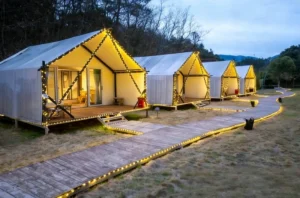
Whether in Japan’s seasonal-themed camps, America’s wilderness parks, or Europe’s mountain and coastal resorts, dome tents have become essential elements for creating differentiated experiences and elevating brand image.
Consequently, selecting the right materials and designs for dome tents has become a critical consideration for operators of premium camping destinations.
How should dome tent sizes be chosen?
When planning a campground, tent size selection often determines overall operational effectiveness. Campground owners must first identify their primary target audience—individuals or couples seeking private experiences, or families and groups requiring more space? Different demographics have vastly different spatial requirements for dome tents.
If tents are too small, guest satisfaction plummets, damaging word-of-mouth reputation. Conversely, oversized tents significantly increase procurement costs while potentially lowering occupancy rates. For campground owners, rational sizing planning impacts not only guest comfort but also directly affects return on investment.
Therefore, selecting the appropriate Dome Tent size transcends mere accommodation design—it is a critical factor for the campground’s long-term profitability and market competitiveness.
For individuals or couples seeking privacy and tranquility, small tents with a diameter of 4–5 meters suffice. These are typically positioned in scenic locations, ensuring seclusion while allowing guests to immerse themselves in the natural surroundings.
For family travelers, medium-sized tents measuring 6–7 meters in diameter are a more suitable choice. These spaces comfortably accommodate 4–6 people while allowing for the planning of sleeping areas, lounges, and even small furniture, creating a cozy living environment.
For high-end clientele or group travelers, large luxury tents are undoubtedly the highlight. Spaces with diameters of 8–10 meters or larger can accommodate 8–10 people and may even serve as small communal activity areas, providing ample space for VIP clients or group gatherings.
Therefore, campgrounds can flexibly combine tents of different sizes during design based on distinct visitor demographics. This approach not only optimizes site utilization but also delivers diverse and enriching accommodation experiences for guests.

How to choose dome tent capacity and layout?
Selecting the right dome tent capacity and layout isn’t just about size—it’s key to whether guests will return. A comfortable, fully functional tent experience often leaves a lasting impression, naturally generating word-of-mouth promotion for the campsite.
Small tents with a diameter of 4–5 meters typically accommodate two beds plus a compact lounge area, making them ideal for couples or solo travelers—comfortable without feeling cramped.
When space expands to 6–7 meters, layouts become more flexible. Such tents can accommodate 4–6 beds while still allowing for a lounge area and storage space. This provides families or small groups with more room to move around during their stay, significantly enhancing convenience.
As for large tents with diameters of 8–10 meters, they are often designed as multi-functional spaces. Beyond sleeping and relaxation areas, they can be arranged as dining zones or compact event venues—perfect for group gatherings or creating exclusive experiences for VIP guests.
One key detail in layout design: prioritize tents with column-free interiors, such as the Polygon Dome. This design maximizes space utilization, creating an open, airy feel that enhances overall comfort.

Which Dome Tent Material is Best for High-End Campgrounds
When selecting a dome tent, the material often determines whether the campsite can balance safety, comfort, and visual appeal. Currently, mainstream high-end dome tents on the market primarily fall into three categories: aluminum alloy frame + double-layer PVC/TPU membrane, PC dome, and glass dome. Each material has its own advantages and suits different camping environments and customer groups.
- Aluminum Alloy Frame + PVC/TPU Membrane Dome
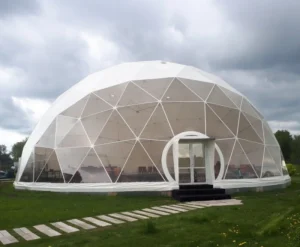
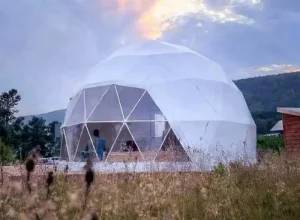
This is the most common and mature option. Frames typically use 6061-T6 aluminum alloy, which is lightweight yet highly durable, capable of withstanding strong winds and snow loads. The outer layer features double-layer PVC or TPU membrane material, offering waterproofing, fire resistance, and UV protection while maintaining stability across temperatures ranging from -30°C to +70°C.
This dome tent type excels in regions with variable climates, such as European mountain campsites or outdoor camps in California and Colorado, USA. It effectively handles cold winters while maintaining comfort during summer. Additionally, PVC/TPU domes offer relatively controlled costs, making them highly suitable for larger commercial campgrounds.
- PC Dome (Polycarbonate Material)
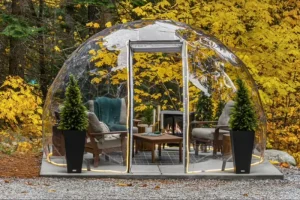
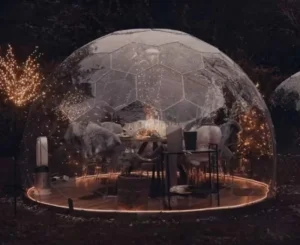
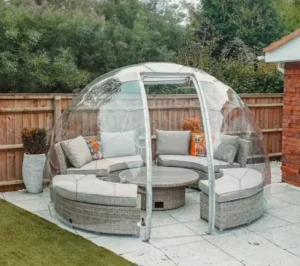
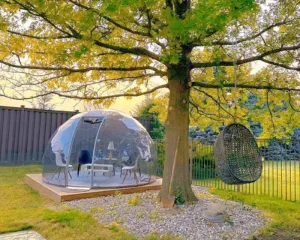
The standout features of PC material domes are their light transmission and weather resistance. They block UV rays while offering glass-like transparency, yet are lighter and more impact-resistant than glass. For campgrounds prioritizing design aesthetics and immersive experiences, PC domes create spaces that “blend seamlessly with nature.”
In Japan’s premium glamping camps, PC Domes are gaining popularity. Japanese camps emphasize harmony with seasonal landscapes, and the transparent material allows guests to admire cherry blossoms, autumn foliage, or snowy vistas from within the tent while maintaining comfortable living conditions.
- Glass Dome
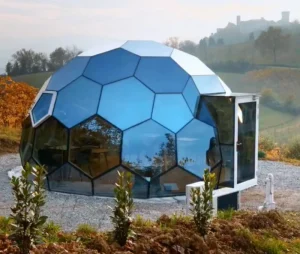
If PVC Domes represent practicality and PC Domes embody design, then Glass Domes epitomize luxury. Glass domes deliver striking visual impact, offer near-panoramic views, and provide superior sound insulation and thermal efficiency compared to other materials.
They are particularly suited for upscale campsites, such as wine estate glamping in California’s Napa Valley or snow-themed camps in Switzerland and Finland. In these settings, glass domes not only deliver luxurious accommodations but also serve as iconic landmarks for the campground.
Dome tents made from different materials each have distinct advantages. For campgrounds prioritizing scale and stable operations, aluminum alloy + PVC/TPU domes are the most reliable choice. If design and natural integration are emphasized, PC domes offer a uniquely distinctive experience. And for those aiming to create high-end or even “viral-worthy” campgrounds, glass domes are most effective at elevating brand image. Selecting the right dome based on the campsite’s location and target audience is key to creating a truly unforgettable, high-end glamping experience.
Are dome tents easy to install and maintain?
This is a common concern among campsite owners. If assembly is difficult or maintenance is time-consuming, it means higher operational costs. Therefore, this is a critical consideration for many campsite operators.
Dome tents feature modular designs enabling rapid setup and takedown, significantly shortening construction cycles while reducing labor costs. This flexibility is especially crucial for camps requiring frequent layout changes or relocation.
Additionally, premium tents often offer excellent scalability. Operators can add annexes to existing structures or connect multiple tents to create larger multifunctional spaces as needed. This design enables camps to dynamically adjust space capacity for diverse client types, ensuring both flexibility and efficiency.
Long-term operational success also hinges on after-sales support. Selecting manufacturers that provide spare parts supply, maintenance services, and upgrade solutions effectively mitigates risks. After all, a robust service system not only ensures tents remain in optimal condition but also empowers camps to evolve continuously based on future trends and customer demands.
How much does a dome tent cost?
When planning a camping budget, price is often one of the top concerns. Differences in size and configuration among various dome tent types directly impact the final cost.
For solo travelers or couples, a small dome tent (4–5 meters in diameter) typically suffices, priced roughly between $2,500 and $4,000. Compact yet cozy, they deliver a warm and inviting stay.
For family travelers, a medium-sized dome (6–7 meters diameter) is a more suitable choice. These tents accommodate 4–6 people, allowing flexible arrangement of sleeping areas, storage, and relaxation zones, typically priced between $5,000–8,000.
For clients seeking luxury experiences or group travel, large domes (8–10 meters diameter) are ideal. They comfortably accommodate 8–10 people and can be transformed into multifunctional spaces, priced between $10,000–18,000 USD.
Custom Domes, commonly found in high-end camps, offer greater pricing flexibility. Costs typically start above $15,000, depending on selected materials, structural complexity, and personalized requirements. Specific quotes require direct consultation with the manufacturer.
Tent Type | Diameter | Capacity | Price Range |
Small Single/Double Dome | 4–5 m | 1–2 people | $2,500–$4,000 |
Medium Family Dome | 6–7 m | 4–6 people | $5,000–$8,000 |
Large Luxury Dome | 8–10 m | 8–10 people | $10,000–$18,000 |
Custom Premium Dome | Customizable | As per requirements | $15,000+ |
Summary
Dome tents are now the preferred choice for many high-end campgrounds. However, when making a purchase, it’s crucial to plan the size and capacity correctly, as this directly impacts the initial investment for your campground.
Additionally, pay close attention to the quality of the dome tent. A high-quality dome tent not only enhances the overall guest experience but also extends its lifespan, thereby reducing your campground’s operational costs.
Choosing a reliable premium dome tent manufacturer means not only acquiring high-quality products but also receiving comprehensive support—from design and transportation to installation and after-sales service.
Gaxdome is a Chinese dome tent manufacturer specializing in premium dome tents, offering tailored campsite solutions to help you build a complete camping destination.