When it comes to choosing the right kind of dome for your needs, understanding the differences between geodesic and monolithic domes is essential. Both types offer unique benefits, but they serve different purposes depending on the project you are undertaking. In this article, we will delve deeper into the key characteristics, benefits, and considerations for each type of dome to help you make an informed decision.
1. What is a Geodesic Dome?
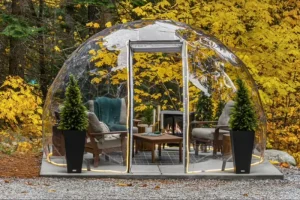
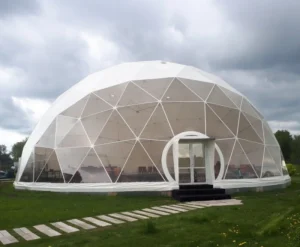
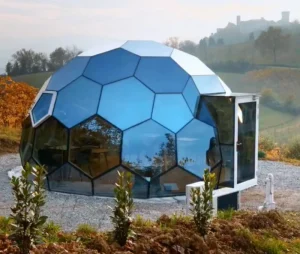
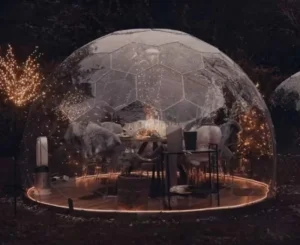
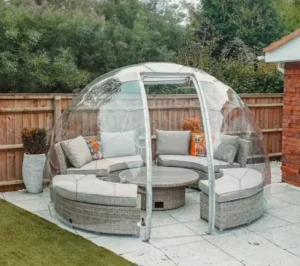
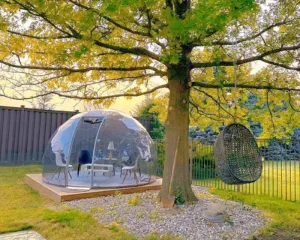
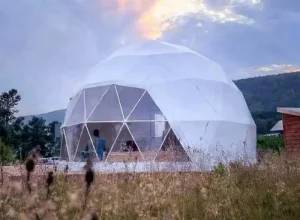
A geodesic dome is a spherical or hemispherical structure made up of interconnected triangles. The design was popularized by architect Buckminster Fuller, who recognized its strength and efficiency. The geometric pattern distributes stress evenly across the structure, making it highly resistant to external forces like wind and earthquakes.

Key Features of Geodesic Domes:
-
Modular Design: Geodesic domes are typically made with a modular approach, where pre-fabricated parts are assembled on-site. This makes construction easier and faster.
-
Lightweight: The materials used in geodesic domes (often steel, PVC, or aluminum) are lightweight yet strong, which means they can be transported and assembled with minimal labor and cost.
-
Ease of Assembly: Because of their modular design, geodesic domes can often be assembled by the owner or a small team without professional help. This makes them ideal for temporary structures like event venues, shelters, or eco-friendly homes.
-
Versatility in Design: The design can be scaled up or down and customized for various uses, including tiny homes, recreational spaces, or community centers.
2. What is a Monolithic Dome?
A monolithic dome, on the other hand, is a single, continuous structure, often made of concrete, that forms a smooth, uniform shell. Unlike geodesic domes, monolithic domes do not have the triangular framing but rely on the inherent strength of concrete to provide support.

Key Features of Monolithic Domes:
-
Permanence: Monolithic domes are designed for long-term use and are typically permanent structures. They are built to withstand extreme weather conditions and require little maintenance once constructed.
-
Durability: The concrete construction ensures that these domes are extremely durable, fire-resistant, and impervious to pests and weathering. This makes them ideal for permanent homes, schools, or emergency shelters.
-
Energy Efficiency: The smooth, rounded shape of the dome combined with the thermal mass of concrete creates excellent insulation, making monolithic domes highly energy-efficient. This reduces heating and cooling costs over the long run.
-
Complex Construction: Unlike geodesic domes, the construction of monolithic domes requires specialized equipment and professional builders. The process is more labor-intensive and expensive, but the end result is a highly secure, lasting structure.
3. Geodesic Dome vs. Monolithic Dome: Detailed Comparison
Cost
-
Geodesic Domes: These domes are significantly more affordable to build due to their lightweight materials and ease of construction. Many people opt for geodesic domes as a cost-effective alternative for temporary housing, event spaces, or even as emergency shelters.
-
Monolithic Domes: While more expensive upfront, monolithic domes are cost-effective in the long run. The materials (concrete) and labor involved in construction lead to higher initial costs, but their durability and low maintenance requirements can lead to significant savings over time.
Construction Process
-
Geodesic Domes: Geodesic domes are relatively easy to construct, especially when using prefabricated kits that simplify assembly. A small team or even individuals can typically assemble these domes in a short period of time.
-
Monolithic Domes: The construction process for monolithic domes is far more involved. Specialized techniques and equipment are required to form the concrete shell, which often involves pouring and molding the concrete in a single continuous process. This makes it a more complex and time-consuming project.
Portability
-
Geodesic Domes: One of the biggest advantages of geodesic domes is their portability. Since they are modular and lightweight, they can be disassembled and moved easily. This is ideal for those who need temporary structures or who are living a nomadic lifestyle.
-
Monolithic Domes: These are designed to be permanent. Once built, they are not portable and are intended for long-term use. The heavy concrete structure makes them difficult to relocate.
Energy Efficiency
-
Geodesic Domes: While geodesic domes are relatively energy-efficient due to their natural airflow and ventilation properties, they generally do not offer the same level of insulation as monolithic domes. However, additional insulation can be added to improve energy efficiency.
-
Monolithic Domes: The solid, continuous shell of a monolithic dome, combined with the thermal mass of concrete, makes it one of the most energy-efficient building types available. These domes maintain a consistent internal temperature regardless of external weather conditions, minimizing the need for heating and cooling.
Aesthetics
-
Geodesic Domes: The modular structure of a geodesic dome allows for more flexibility in terms of design and customization. They can be adapted to various purposes, whether it’s a small home or a large communal space. They are also often viewed as more aesthetically unique, with a futuristic, organic look.
-
Monolithic Domes: Monolithic domes are less flexible in terms of design. Their uniform, smooth exterior tends to be more rugged and practical in appearance. While some may find them visually unappealing, others appreciate their strength and efficiency.
4. Which Dome is Right for You?
The decision between a geodesic and a monolithic dome ultimately comes down to your needs:
-
Choose a Geodesic Dome if: You are looking for a cost-effective, temporary solution that is easy to assemble, portable, and customizable. Geodesic domes are perfect for people who need a flexible structure for short-term use or those who want to experiment with unique, eco-friendly housing solutions.
-
Choose a Monolithic Dome if: You need a permanent, durable structure that can withstand extreme weather and provide long-term energy savings. Monolithic domes are ideal for people seeking a reliable, low-maintenance home or building with an emphasis on sustainability and energy efficiency.
Conclusion
Both geodesic and monolithic domes offer distinct advantages, depending on your specific needs. If you’re interested in a temporary, cost-effective structure, a geodesic dome may be the perfect fit. However, if you’re seeking a permanent, durable, and energy-efficient solution, a monolithic dome is the way to go. Understanding the key differences between these two types of domes will help you make the best choice for your project.