Introduction
Want to create a greenhouse for growing greenery or vegetables in your own back garden? Traditional greenhouses, although common, usually require foundations and are relatively fixed structures that are not conducive to dismantling and relocation. And due to structural shading, it is often not possible to fully bathe plants in sunlight, affecting growth results.
In contrast, the **Geodesic Dome Greenhouse** is a more efficient and aesthetically pleasing alternative. Not only is it simple to set up and requires no complex foundations, it also provides 360° sunlight to maximize plant photosynthesis. At the same time, it is structurally stable, with good resistance to wind and snow, and when properly maintained, can last for many years, making it an ideal solution for modern home gardening.
Of course, in addition to the advantages of the geodesic dome greenhouse, there are also some disadvantages and shortcomings. The next step is to introduce the geodesic dome greenhouse in detail.
What is a geodesic dome greenhouse?
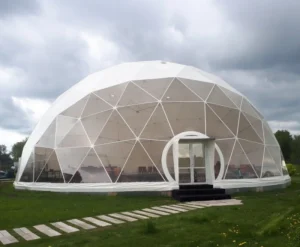
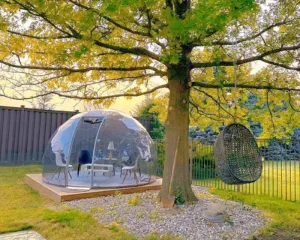
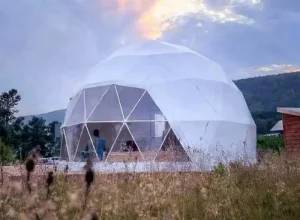
A geodesic dome greenhouse is a greenhouse designed with a geodesic structure, usually made of transparent PVC material. It has a hemispherical shape and uses geometry to disperse light and optimize the internal environment. This design not only provides good light conditions, but is also effective against natural elements such as snow and wind.
Why choose a geodesic dome greenhouse?
There are a variety of reasons to choose a geodesic dome greenhouse. Firstly, its unique hemispherical design maximizes the use of sunlight and significantly reduces energy consumption, achieving energy efficiency and environmental protection goals. This shape distributes light evenly, promoting healthy plant growth.
Secondly, the geodesic dome greenhouse has a dead-end-free internal space layout, which greatly improves space utilization, making it suitable for growing a wide variety of plants and meeting different horticultural needs. Whether it is vegetables, flowers or medicinal plants, all of them can find suitable growing space in this greenhouse.
In addition, the hemispherical structural design enhances the stability of the greenhouse, which effectively reduces the risk of damage, especially in the event of inclement weather. This sturdy structure makes the greenhouse more reliable in natural conditions such as snow and wind.
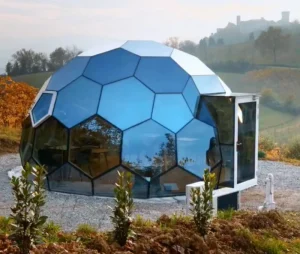
Finally, the dome shape is not only functional but also adds beauty to the gardening space. Its unique exterior design makes it a highlight in the park or home garden, suitable for a variety of gardening styles, showing off the owner’s taste and aesthetics.

What are the benefits of geodesic dome greenhouses?
The geodesic dome greenhouse is favored because of its many advantages. Here are the main advantages:
- Excellent Structural Stability:The triangular elements of the dome evenly distribute stress, making it highly resistant to wind and snow. Its aerodynamic shape reduces the risk of collapse in extreme weather.
- Large, Open Interior Space:Thanks to its self-supporting design, the dome provides a spacious, column-free interior—ideal for flexible crop layouts, large equipment, or vertical farming systems.
- Efficient Use of Materials and Space:With minimal surface area for a given volume, the dome requires fewer materials and reduces energy loss. Its round footprint maximizes usable space with no dead corners.
- Superior Natural Lighting:The spherical shape allows sunlight to enter from all angles, ensuring even illumination throughout the interior, promoting healthier and more balanced plant growth.
- Visually Striking Design:The dome’s modern, organic appearance blends beautifully with nature and serves as an attraction in itself—perfect for agri-tourism, educational projects, and eco-parks.
To summarize, the geodesic dome greenhouse has become one of the modern greenhouse solutions in pursuit of high efficiency and sustainability by virtue of its robustness, open space, energy saving, environmental protection, good lighting and other advantages.
What are the disadvantages of geodesic dome greenhouses?
Despite the many advantages of geodesic dome greenhouses, there are some inherent disadvantages and challenges that need to be considered when deciding to adopt this structure:
- Space Utilization Limitations:The dome’s curved structure results in low and narrow corner areas that are difficult to use effectively, leading to wasted space and less flexible planting layouts compared to rectangular greenhouses.
- Complex Construction and Maintenance:Geodesic domes require precise assembly of multiple unique components, making construction technically demanding and time-consuming. Additionally, curved covering materials often need customization, which raises both building and maintenance costs.
- Ventilation and Drainage Issues:The curved roof limits skylight installation, which may hinder effective ventilation and lead to heat or humidity buildup. Rainwater runoff also requires custom-designed drainage systems to prevent leakage.
- Cost Considerations:Although domes can be material-efficient in theory, specialized connectors, coverings, and the need for custom equipment often offset any savings—especially for small-scale setups.
- Environmental Control Difficulties:Heat tends to accumulate at the top of the dome, causing temperature imbalances. Without well-designed ventilation or circulation systems, airflow may stagnate and harm plant health.
In general, geodesic dome greenhouses have some shortcomings in terms of space utilization, construction and maintenance, ventilation and drainage, and cost. In practical application, improvement measures need to be taken to address these shortcomings in order to give full play to its advantages and make up for the shortcomings.
Frequently Asked Questions and Practical Suggestions for Geodesic Dome Greenhouses
1. Initial design and measurement are more complicated
Geodesic dome structure consists of multiple triangles, which requires higher requirements for measurement of dimensions and control of angles. For first-time users, there may be quite a lot of errors in designing and assembling on their own, especially when it comes to splicing, which is prone to structural instability or poor connection.
Practical advice: In order to avoid the structure not being able to be put together due to errors, it is recommended to directly purchase a standardized dome greenhouse kit. Most of the kits have prefabricated frames and connectors, and users only need to assemble them according to the instructions, which saves time and reduces installation difficulties.
2. Relatively high construction cost
Compared with traditional rectangular greenhouses, geodesic domes require more accessories and higher processing costs due to their special structure. If you choose glass or all-steel, the overall budget will rise significantly.
Practical advice: In order to strike a balance between durability and cost, the combination of an aluminum alloy frame with a PVC membrane is recommended. Aluminum is not only corrosion-resistant and lightweight, but also long-lasting, while PVC is cost-controlled, waterproof and light-transmitting, making it suitable for home gardening or small farms.
3. Insufficient Ventilation and Moisture Removal
The spherical structure is better airtight, but if the ventilation design is not reasonable, it is easy to accumulate heat or produce condensation in summer, which will affect the growth of plants.
Practical advice: Before purchasing a greenhouse, you can communicate with the manufacturer to customize it to ensure that the top and sides are equipped with ventilation windows or shutters. At the same time, reserve low-level air inlets at the bottom to form upper and lower air convection, improve overall ventilation efficiency and reduce moisture accumulation.
4. Later maintenance and repair are relatively inconvenient.
The overall closure of the dome structure is high, and once a certain node or panel is damaged, it is relatively difficult to deal with the maintenance, especially inconvenient to operate in the height part.
Practical suggestions: use removable connectors at the construction stage to facilitate later inspection and replacement. In daily use, the connection points and membrane materials should be checked regularly, and dust and debris should be cleaned up in time. At the same time, it is recommended to keep some spare panels and fittings in case of emergency, to improve the safety and life of use.

What can a geodesic dome greenhouse do besides grow?
While “greenhouse” is one of the most common uses for Geodesic dome structures, its unique design and light-transmitting materials make it much more than that. The transparent PVC cover material and the dome shape not only have a sense of technology, but also create an open and airy space atmosphere, which is ideal for a variety of creative uses:
Family leisure and social space
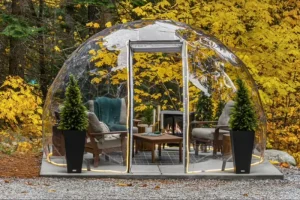
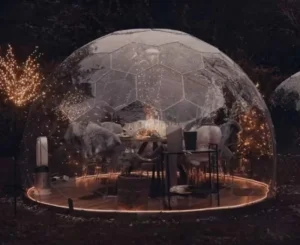
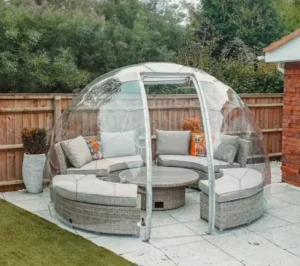
Set up the dome greenhouse as a garden living room, with carpets, rattan chairs, and a few greenery and night lighting decorations, it is an independent and peaceful corner for leisure. Whether you are reading, drinking tea, or gathering with friends and relatives, you can enjoy the relaxing experience of integrating with nature.
Art and Creative Exhibition Space
The spherical structure itself is full of visual impact, which is ideal for temporary art installations or small-scale exhibition halls. Whether it is sculpture, photography or installation artwork, this “natural exhibition hall” can achieve a more attractive display effect, especially for outdoor art festivals, gardening festivals and other events.
Educational and Ecological Practical Base
The Geodesic Dome Greenhouse is an excellent ecological teaching space for schools or nature education organizations. Children can observe plant growth, learn about climate change, and conduct small hydroponic experiments, turning abstract scientific knowledge into visual experience.
Small-scale eco-agricultural experiment station
These domed structures are also commonly used in family farms or research institutions for eco-agricultural experiments, such as testing the feasibility of new cultivation techniques in conjunction with hydroponics, aeroponics, or micro-circulation farming systems. Enclosures help to control environmental variables and increase the stability of experiments.
Summary
Geodesic dome greenhouses have won more and more attention for their unique design and versatility. Although there are some drawbacks, its advantages can be fully realized through reasonable material selection and maintenance. Whether used for home gardening, education or as an art space, geodesic dome greenhouses have shown their unique value. Hopefully, this article will help readers better understand this innovative greenhouse structure and make an informed choice.
If you are considering building a geodesic dome greenhouse at your home, contact Gaxdome, a professional dome tent manufacturer from China, who not only offers factory-direct pricing, but also supports an international shipping service that delivers the complete greenhouse kit directly to your doorstep, without you having to worry about customs clearance. Save your mind, effort and cost, and easily realize your ideal greenhouse space!