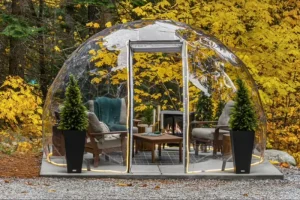
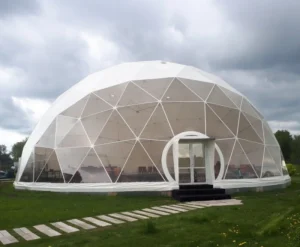
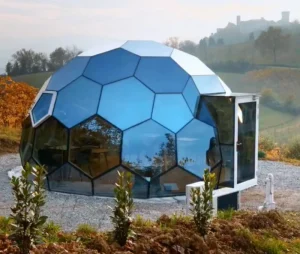
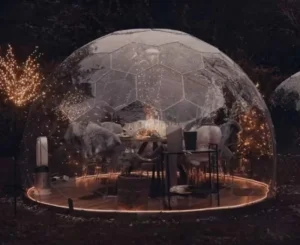
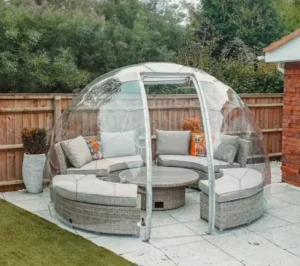
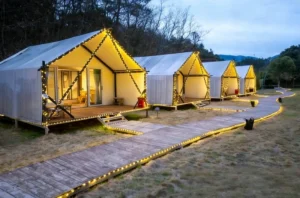
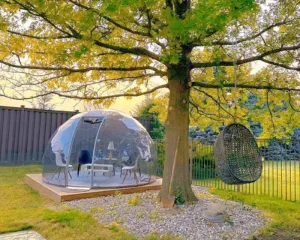
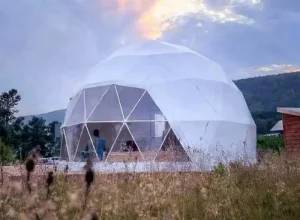
With the growth of the outdoor tourism industry, including glamping, internet-famous homestays, and commercial events, geodesic dome tents have become a popular choice for various outdoor activities.
Not only do they boast captivating and unique designs, but they also excel in wind resistance, durability, and sustainability, making them widely used in resorts, campgrounds, wedding parties, and trade shows.
However, many investors and camp owners often encounter these pain points when choosing a dome tent:
- Understanding the material choices can lead to high operating costs and a poor user experience;
- Understanding the differences between different uses can hinder selection of the most appropriate specifications;
- Desiring to create a high-end and unique campsite or event venue can be challenging, but professional advice is lacking.
In this article, drawing on Gaxdome’s years of industry experience, we will help you quickly understand the types of dome tents and the key factors to consider when choosing one, from the perspectives of material classification and application scenarios.
Why Dome Tents Are So Popular in the Market
Whether for outdoor events, glamping campsites, or trade shows, dome tents are becoming the preferred choice of more and more project organizers due to their superior performance and visual impact.
Before delving into the different types of dome tents, let’s first examine why this unique structure has quickly become popular in the global market.
1. Strong Wind and Snow Resistance
The dome tent’s triangular geometric structure evenly distributes external pressure, ensuring a stable and deformable frame.
According to ASCE 7-16 standards, high-quality dome tents can withstand force 10 winds (approximately 89-102 km/h), meaning they can be used reliably even at the seaside or in high-wind areas.
In terms of snow load, the Gaxdome dome tent structure can withstand 75 kg/m2 of accumulated snow, complying with the European EN 13782 safety standard for temporary structures.
This makes it ideal for winter operations such as mountain resorts and ski resorts, ensuring the safety of both visitors and equipment.
2. No Internal Columns, Highly Utilizable Space
The dome tent’s self-supporting frame design eliminates the need for any internal columns, providing 100% usable space. Compared to traditional peak-top tents, this design allows for greater interior layout flexibility and can accommodate larger furniture or stage equipment.
For example, a 10-meter-diameter dome tent provides approximately 78 square meters of open space, sufficient for a two-bedroom suite or a small event venue for 30 people.
This highly efficient structure is ideal for settings requiring flexible layouts, such as camping resorts, wedding parties, or exhibitions.
3. Strong Visual Impact
The unique spherical appearance is highly recognizable, making it a key visual symbol for events or commercial spaces.
In the era of social media marketing, this design often generates additional traffic, encouraging visitors to take photos and share their experiences.
According to the Booking.com 2024 Travel Trends Report, over 63% of travelers are willing to pay a higher price for unique accommodation experiences.
This means that a well-designed dome tent not only enhances brand image but also serves as a long-term marketing tool.
4. Reusable and Sustainable
The dome tent’s modular design allows for quick assembly and disassembly, allowing for multiple uses.
This feature allows operators to flexibly adjust the venue layout for different events or seasons, reducing long-term investment costs. Gaxdome’s dome tents are ISO 14001 certified, with frames made of recyclable aluminum alloy and tarpaulins that comply with EU REACH environmental standards.
Compared to temporary, disposable structures, dome tents are not only more environmentally friendly but also help businesses achieve green operations.
For long-term projects, such as campsites or resorts, choosing a dome tent with a stable structure and easy maintenance can effectively reduce ongoing maintenance costs.
Dome Tent Types and Applications by Material
When choosing a dome tent, the material you choose directly impacts its lifespan, protective performance, and applicable scenarios. Dome tents made of different materials have their own advantages and disadvantages. Below, we will take a closer look at three common materials—PVC, PC, and glass—and analyze their suitability for various events or commercial scenarios.

1. PVC Dome Tents: A Cost-Effective Option for Short-Term Events
PVC dome tents are the preferred choice of many event organizers due to their affordability, light weight, and quick setup.
These tents typically utilize high-strength PVC fabric and an aluminum alloy frame, offering excellent waterproof and flame-retardant properties. It’s ideal for short-term events, such as music festival stages, outdoor exhibitions, and wedding parties.
If you’re looking for an economical dome tent on a limited budget, PVC is the best choice.
For example, a 10-meter diameter dome tent can accommodate approximately 60-80 people, making it ideal for small commercial events or temporary catering spaces.
However, its weather resistance is relatively weak, and prolonged exposure to wind and sun may cause the PVC film on the surface to age or fade.

2. PC Dome Tent: Lightweight, Durable, and Suitable for Semi-Long-Term Use
PC (polycarbonate) dome tents are lightweight, durable, and UV-resistant, offering a mid-range to high-end option between PVC and glass tents.
The outer layer of this tent is made of transparent PC sheet material, resembling a translucent “crystal dome.” It’s not only beautiful but also offers visitors a 360° panoramic view.
PC dome tents are particularly suitable for campsites, resorts, specialty restaurants, exhibitions, and other settings.
Compared to PVC, PC tents are more weather-resistant and can last for 3-5 years outdoors, with minimal need for frequent film replacement. Its excellent thermal insulation keeps it cool in the summer and traps heat better in the winter, making it ideal for year-round locations.
PC tents are slightly more expensive than PVC tents but significantly cheaper than glass tents, making them the preferred choice for most high-end campsites or luxury glamping sites.
For example, an 8-meter diameter PC dome tent can be transformed into a couple’s camping cabin, accommodating a large bed, table and chairs, and a small bathroom, offering exceptional comfort and privacy.

3. Glass Dome Tent: A Must-Have for High-End Venues
If you’re looking for a high-end, permanent outdoor structure, a glass dome tent is the best choice.
Glass is not only durable but also tempered, offering exceptional wind and snow resistance, making it ideal for long-term, fixed installations.
Glass tents are commonly used in commercial settings, such as high-end restaurants, five-star hotels, and luxury camping resorts.
They are not only functional spaces but also visual landmarks, serving as a key branding feature.
For example, a 12-meter diameter glass dome tent can be used not only as a restaurant but also for wedding banquets, exhibitions, and even as a greenhouse garden. However, glass tents are more expensive, take longer to set up, and require a significant initial investment.
However, in the long run, they offer low maintenance costs and a long service life, ensuring a return on investment within a few years.

4. Mirrored Dome Tents: A Blend of Art and Commerce
Mirrored dome tents are renowned for their unique reflective properties, blending seamlessly with their surroundings and creating a striking visual impact.
Under sunlight or lighting, they resemble an art installation, creating a striking and eye-catching effect.
This type of tent is commonly used for events such as brand launches, art exhibitions, high-end weddings, and theme parties, particularly for those seeking a unique experience and high visibility.
For example, luxury brands can use mirrored domes as venues for new product launches, creating an immersive event experience;
Wedding planners can use them to create dreamy outdoor weddings, offering guests unforgettable photo opportunities.
Mirrored domes are more than just an event space; they are also a powerful marketing tool, serving as a key selling point for events and helping organizers achieve widespread social media coverage.
The main client base includes exhibition curators, brand marketing agencies, and high-end wedding planners.
Material Selection Comparison Table
Material Type | Price Range (USD) | Lifespan | Setup Speed | Suitable for Use |
PVC | $2,000 – $10,000 | 1–2 years | Fastest | Weddings, trade shows, music festivals |
PC | $5,000 – $20,000 | 3–5 years | Medium | Glamping camps, specialty restaurants |
Glass | $20,000+ | 10+ years | Slowest | Resorts, hotels, long-term construction |
Mirror | Custom Price | 5–8 years | Medium | Brand events, art exhibitions, theme parties |
Selection Guide by Application
Besides the material, the application scenario is also a crucial factor in choosing a dome tent.
Different scenarios require different tent sizes, materials, and visual designs.
To help you quickly find the right product for you, we’ve compiled a comparison chart based on application categories, offering practical recommendations and reference specifications, from luxury camping to large-scale commercial events.
Application Scenarios Recommended Materials Recommended Size Range Features
Use Case | Recommended Materials | Suggested Size Range | Key Features |
Glamping | PVC, PC | 4m – 8m | Economical and practical, suitable for individuals or families |
High-end Resorts or Hotels | Glass, PC | 6m – 10m | High-end, durable, suitable for all-season operations |
Large-Scale Commercial Events | PVC, Mirror | 12m – 30m | Visually impactful, customizable with brand logos |
Agricultural Greenhouses | PVC, PC | 8m – 20m | Excellent light transmittance and weather resistance |
Weddings and Parties | PVC, Mirror | 10m – 20m | Romantic and elegant, suitable for themed events |
We once designed a set of 6m and 8m PVC dome tents for a seaside campsite. With their transparent window design, they attracted over 5,000 visitors in their first year and achieved a return on investment of less than 9 months.
How to Choose the Right Dome Tent for You
Choosing the right dome tent not only impacts the stability of your project but also directly impacts your return on investment. For first-time users of dome tents, the most common concerns often center around budget, frequency of use, and climate conditions. Below, we’ll analyze each of these and provide specific data to help you quickly find the most suitable solution.
1. Choose Based on Budget
Budget is often the primary factor influencing your decision.
If you’re in the initial trial phase, such as a new campsite or short-term event, you can opt for a PVC dome tent.
According to Gaxdome’s market data, a 6-meter diameter PVC dome tent costs approximately $2,500–$4,000 USD. Compared to similarly sized PC tents (approximately $5,000–$8,000 USD) and glass tents (over $15,000 USD), choosing PVC can save approximately 50%–80% on initial investment.
PVC tents are easy to set up and dismantle, effectively reducing initial investment and maintaining financial flexibility when uncertain market response arises.
For projects with established customer traffic or a clear long-term operational plan, investing directly in glass or PC domes is recommended. Despite the higher initial investment, PC and glass tents offer greater durability and lower maintenance costs in the long run. They also enhance the venue’s class and brand image, making your project more competitive.
For example, an 8-meter diameter PC tent has a lifespan of over five years, while a glass tent can last for over 10 years. The average annual cost is approximately 30% lower than that of a PVC tent.
2. Determine based on frequency of use
The frequency of use of a dome tent directly influences the type of structure required.
For temporary events or projects that require frequent venue changes, such as traveling exhibitions, brand pop-up stores, or outdoor music festivals, it’s recommended to choose easily disassembled PVC tents. These tents are lightweight, easy to transport, and can be re-erected multiple times, allowing you to quickly adapt to different venue requirements.
If your project is located in a fixed location, such as a resort, hotel, restaurant, or year-round greenhouse garden, highly durable glass or PC tents should be prioritized.
Although these highly durable materials require a higher initial investment, they offer superior lifespan and safety, saving on repair and replacement costs over time and providing a higher long-term return on investment.
3. Make a Decision Based on Climate Conditions
Different climates have different requirements for the structure and accessories of a dome tent.
In cold regions, it’s recommended to choose a tent with insulation, a double-layer tarp, and heating to ensure winter comfort. Polycarbonate (PC) and glass tents perform better in such environments because they offer better insulation than PVC.
In windy areas, a structurally reinforced tent is essential to ensure stability and security even in strong winds. According to the ASCE 7-16 International Building Standard, Gaxdome’s dome tents can withstand winds up to force 10 (approximately 100 km/h), making them ideal for harsh environments such as the seaside, deserts, and plateaus.
4. Professional Advice: Customization is the Best Solution
Each project’s site conditions and operational objectives are unique, so it’s crucial to communicate with Gaxdome’s professional engineering team before purchasing.
By thoroughly understanding your use case, budget, and long-term plans, our engineers can provide you with a customized design to ensure optimal safety, aesthetics, and functionality. Whether you’re building a high-end glamping camp or planning a large-scale commercial event, Gaxdome provides full-process support from design to installation, making your investment more secure and efficient.
FAQs about Geodesic Dome Tent
1.How long does a dome tent last?
The lifespan of a dome tent varies depending on the material used. PVC tents typically last 5-8 years, while glass tents can last over 15 years.
2.Does it require a foundation?
This depends on the duration of your use. If you’re planning a temporary event, a steel foundation is recommended. For long-term use, a concrete foundation is recommended.
3.How long does it take to set up a dome tent?
This depends on the size of the tent. Generally, a small 5-8m dome tent can be completed in 1-2 days, while a large dome tent takes about 5-7 days.
4.Can a dome tent be used in winter?
Absolutely. Insulation and heating can be added to maintain the indoor temperature and ensure a warm and cozy stay.
Summary
Spherical tents offer a wide variety of types and uses. Choosing one requires a comprehensive consideration of your budget, usage scenarios, and long-term operational goals.
If you’re new to the glamping market, we recommend starting with a PVC dome tent, which offers low investment risk and a quick return on investment.
If you’re looking to create a high-end resort or commercial venue, a glass or mirrored dome tent can better reflect your class and brand value.
If you’re still unsure about your choice, please contact us with your requirements, including your budget, usage scenario, and location. We’ll tailor the optimal solution to your budget, needs, and environment.
Gaxdome, a Chinese dome tent manufacturer with over 20 years of experience in tent design and manufacturing, offers one-stop services from concept design, production, and installation, making your project more competitive.