Do you want to use a geodesic dome tent at a campsite, resort, or for a commercial event, or even consider it as a long-term leisure space? Before you start building, there’s a crucial question you need to clarify – do you need a permit?
Ignoring this question could lead to fines, forced demolition, or even safety risks. However, it’s not a simple “yes” or “no” answer. Several factors need to be considered, including your intended use, location (country or region), dome size, materials, and construction time.
Below, we will explain in detail, from different perspectives, whether a permit is required for building a geodesic dome tent.
Determining Permit Requirements Based on Usage Scenarios
Residential Use
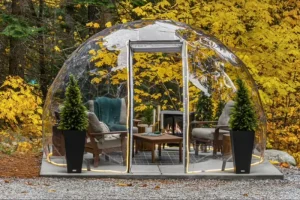
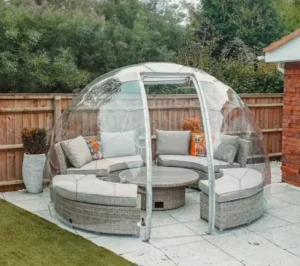
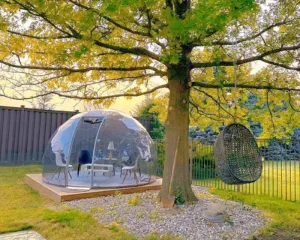
If you want to build a geodesic dome tent in your backyard for temporary leisure, entertainment, or accommodation, a dome with a diameter of less than 6 meters is usually sufficient. It’s generally considered a high-end awning or a removable tent, which is simply erected on the ground for an extended period but not considered a permanent dwelling. In many areas, this does not require a building permit.
However, if you want the geodesic dome to be permanently fixed to the ground, or even intend to live in it long-term, the situation is different. It will be considered an accessory building or a long-term structure. In this case, you will need to submit a building permit or regulatory approval.
You can understand it this way: for temporary activities, like setting up an awning in your backyard, a permit is not required. But if you plan to live in it long-term, it’s like building a small house in your backyard, which requires government approval to ensure structural safety.
Commercial Use
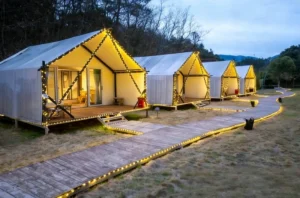
When you plan to build a geodesic dome tent for your commercial activities, the situation is even more complex. Whether it’s for campsites, hotels, restaurants, exhibitions, or office space, you will almost certainly need to apply for building permits and fire safety permits.
When a geodesic dome tent is used as an event venue, a large space is usually required, meaning large-sized dome tents. It needs to have high load-bearing capacity and meet safety regulations such as wind resistance, snow load, fire exits, and emergency evacuation to ensure the safety of the event.
Generally, commercial geodesic dome tents require pre-prepared drawings, structural calculation reports, and other safety certifications.
Temporary Event Use
If you want to use a geodesic dome tent for a temporary event, such as a wedding, market, or music festival, permit requirements usually depend on the duration of the event and the number of attendees. Many areas allow you to erect temporary structures, but there are time limits, such as no more than 30 days. In addition, you need to ensure clear access, clearly marked exits, and compliance with public safety regulations.
You can think of this permit requirement as an “event permit”—you can use it for a short period, but you must comply with regulations and restrictions. Because even for temporary use, if there is a large crowd, any structural defect can be dangerous, so laws and regulatory bodies require you to apply and register in advance.
Analyzing Permit Requirements by Country or Region
The permit requirements for geodesic dome tents are not only affected by their use but also closely related to the laws and regulations of the country and region. Regulations vary greatly from region to region, and ignoring this can easily lead to problems.
United States
In the United States, regulations differ significantly between urban and suburban areas. If you are building a small backyard dome in a residential area, many places will not require a building permit, but you still need to pay attention to community regulations and neighborhood agreements.
On the other hand, commercial use almost certainly requires a building permit, fire safety inspection, and may even involve ADA (Americans with Disabilities Act) requirements. Therefore, you should contact your local municipal planning department or building department before construction to obtain clear guidance.
Europe
In European countries such as Germany, France, and Italy, requirements for structural safety, wind and snow resistance, and fire safety are very strict. Temporary event domes can apply for a “temporary building permit,” but if long-term use is planned, they must comply with local building codes.
You can think of it this way: a temporary tent is like a short-term rental car, while a long-term fixed dome is like buying a new car and needing to register it.
Asia
In China, small temporary domes usually require an application for temporary land use or an event permit, while large fixed domes require building design approval.
Regulations in Japan are stricter; even residential use requires planning approval, and commercial use almost always requires a building permit.
Regulations in Southeast Asia vary considerably and require consultation with local planning or fire departments.
Determining Permit Requirements by Size
The size of the geodesic dome tent is one of the important factors in determining whether a permit is required. Generally, the larger the size, the higher the potential safety risks, and the stricter the legal requirements for construction. Therefore, before planning your dome construction, understanding which size category your dome falls into will help you determine whether you need to apply for a permit and what materials and approval procedures are required.
Small Domes (diameter <6 meters)
Small domes are usually considered movable temporary structures, and generally do not require a permit for residential use. They can be used for backyard recreation or small camping activities. These domes are lightweight and easy to assemble, and do not cause disturbance to neighbors, so legal requirements are relatively relaxed.
Medium Domes (diameter 6–12 meters)
Medium domes fall between small and large domes. Some areas may require you to apply for a temporary building permit or undergo a structural review, especially if used for commercial activities or long-term fixed use.
You need to pay attention to safety issues such as load-bearing capacity, fire exits, and foundation stability, as these factors directly affect safety and legality.
Large Domes (diameter >12 meters)
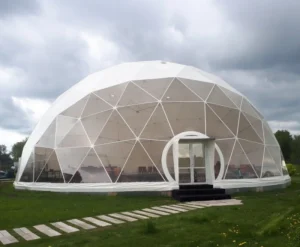
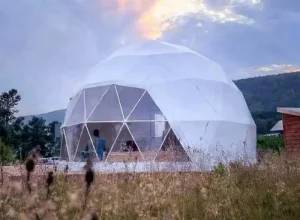
Large domes almost always require a building permit in all areas. They are often used for commercial, public events, or holiday camps. In addition to a building permit, you may also need to submit structural calculations, wind and snow resistance design plans, and even foundation construction plans.
Imagine, a dome with a diameter of more than 12 meters is like a lightweight building; without strict regulations, any extreme weather could cause an accident.
Other Factors Affecting Geodesic Dome Permits
In addition to purpose, location, and size, several other factors directly affect whether you need a permit:
- Materials: Different materials such as PVC, steel structures, and wooden frames have different safety requirements. Steel structures usually require approval, while lightweight membrane materials may be more flexible.
- Construction Time: Short-term temporary construction usually requires fewer permits, but long-term fixed structures are subject to strict regulations.
- Location: Public land, protected areas, or strictly planned communities may require additional permits.
- Height: Domes that are too tall may trigger building code restrictions and require additional permits.
The common thread among these factors is: the more “stable, durable, and conspicuous” the structure is, the more likely it is to trigger permit requirements. In other words, the more your structure resembles a small house, the more attention it will attract from regulatory authorities.
FAQs about Geodesic Dome Permits
1.Do backyard dome tents require a permit?
Small, temporary backyard domes usually do not require a permit, but if they are permanently fixed or converted for residential use, a building permit may be required. It is recommended to confirm local regulations in advance.
2.How to apply for a building permit for a dome used for commercial activities?
Commercial domes typically require permits from the local planning or building department, and require submission of design drawings, safety reports, and usage plans to comply with safety regulations.
3.Do dome tent regulations vary significantly between different countries?
Yes, regulations vary significantly between the United States, Europe, and Asian countries. Requirements differ for residential and commercial use, and it is essential to consult with local authorities before construction.
4.Do large dome tents require structural calculations?
Yes, large or long-term use domes usually require structural calculations to ensure the frame is safe, wind-resistant, and collapse-proof.
5.How long can temporary event domes be erected?
Many regions stipulate that temporary domes cannot exceed 30 days. Extensions may be possible in some areas, but safety regulations must be followed.
Recommendations Before Erecting a Geodesic Dome Tent
To ensure the legality of your dome tent construction, you need to understand the following before construction:
Consult your local planning or building department in advance: Provide information on the dome size, purpose, and construction duration to obtain permit requirements.
Comply with building safety regulations: Ensure that load-bearing capacity, wind resistance, snow load, and fire safety requirements meet standards.
Long-term planning: If you plan for long-term use or commercial purposes, design a structural plan and apply for permits in advance to avoid future problems.
Safety first: Even for temporary structures, consider emergency evacuation, entrances and exits, and crowd management to protect yourself and others.
Conclusion
In general, whether a dome tent requires a permit depends mainly on its purpose, location, size, materials, and construction duration.
If you are simply erecting a small backyard dome for entertainment or temporary leisure, the permit requirements may be relatively lenient; however, if it involves commercial use, large events, or long-term fixed structures, the law will almost certainly require you to apply for a building permit and safety approval.
As a professional dome tent manufacturer, Gaxdome has served customers worldwide for many years and understands that the most important factors to consider when erecting a dome tent include purpose, location, size, materials, and construction duration.
If you plan to erect a small backyard dome for entertainment or temporary leisure, the permit requirements may be relatively lenient; however, if it involves commercial use, large events, or long-term fixed structures, almost all regions require you to apply for a building permit and undergo safety approval.
At Gaxdome, we can provide you with dome tents of various sizes and materials, and can provide professional structural calculations to help you successfully complete the approval and construction process.
Whether for a backyard, event venue, or commercial project, Gaxdome provides safe, reliable, and locally compliant solutions to make your dome construction project easier and more professional.