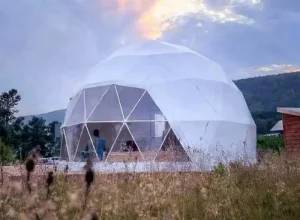
In addition to choosing a suitable hotel tent for accommodation, campsites often need to set up some activity areas, such as a restaurant, children’s playground, and venues for hosting parties. Large Indian tents, with their unique design and year-round functionality, have become a popular choice for many campsites.
So how do you choose the right large Indian tent? First, you need to understand the price range, advantages, and return on investment of large Indian tents. Once you have a clear understanding, you can choose the right one based on your needs.
How much does a Indian tent cost?
The price of a large Indian tent is not fixed; it varies depending on the size, material, and features. The following are price references based on market data:
8-meter (approximately 26 feet) diameter tent: Suitable for 20-30 people, price range approximately **$2,000-$3,500**.
10-meter (approximately 33 feet) diameter tent: Suitable for 30-50 people, price range approximately **$3,500-$5,000**. 12-meter (approximately 39-foot) diameter tent: Suitable for 50-70 people, priced between approximately $5,000 and $7,000.
The above tent prices are for the tent itself and do not include the cost of flooring, shelter, or other additional amenities. Therefore, choosing the right tent requires first selecting the right size, which can also save you money.
How do I choose the right tent for my campsite?
When choosing a large Indian tent, you need to consider key factors such as capacity, material, functionality, and installation and maintenance to ensure it meets your campsite’s needs and offers commercial value. Here are some detailed guidelines:
1. Choose the Indian Tent Size According to Your Needs
When selecting the size of your tent, you should consider your daily visitor flow and intended use. Below is a reference table for common sizes and their suitable applications:
Tent Diameter | Capacity | Suitable Use |
8m (26ft) | 20-30 people | Small dining area, family gatherings, children’s activities |
10m (33ft) | 30-50 people | Medium restaurant, themed parties, group activities |
12m (39ft) | 50-70 people | Large restaurant, corporate events, festive celebrations |
15m (49ft) | 80-100 people | High-capacity event space, luxury glamping restaurant |
When choosing a size, consider that a tent that is too small may not accommodate enough guests, while one that is too large could waste space and increase operational costs. It is generally recommended to allocate about 1.2–1.5 square meters per person, while also accounting for table and chair arrangements and walking paths.
2. Choose the Suitable Material According to Use
The material determines the tent’s durability, comfort, and safety. Common materials and their features are as follows:
Material | Features | Suitable Conditions |
High-Density Canvas | Waterproof, UV-resistant, breathable | Year-round outdoor use, luxury glamping, long-term use |
Cotton Blend Fabric | Breathable, natural and comfortable | Summer events, family-friendly campsites, photo spots |
PVC Coated Fabric | Waterproof, fire-resistant, easy to clean | Rainy or wet environments, dining areas, public events |
When selecting a material, you should consider the frequency of use, climate conditions, and maintenance costs. For example, in humid areas, PVC coated fabric or high-density canvas is recommended, while in dry regions, cotton blend fabric can provide better comfort.
3. Choose functional features based on usage needs
Functional features directly impact the guest experience and venue operational efficiency. Key considerations include:
Flooring: Wood or PVC flooring ensures a clean, comfortable dining area or event space, while also being moisture-resistant and slip-resistant.
Windows and doors: Provide ventilation and lighting, while also providing emergency exits.
Skylight: Increase natural light during the day, saving on lighting costs.
Fire pits or heaters: Ensure a warm and comfortable dining area in winter.
Partition systems: Provide flexibility by dividing the space into different areas.
4. Choose based on installation ease and maintenance costs
The installation and maintenance costs of a large tent are not negligible. Consider the following when selecting:
Structural design: Modular design and a lightweight aluminum alloy frame reduce installation difficulties.
Disassembly and relocation: Convenient for temporary events or seasonal relocation.
Cleaning and maintenance: Easy-to-clean surfaces and removable fabrics reduce labor costs.
By considering these factors, you can choose a large Indian tent that is durable, comfortable, and easy to manage, increasing your camp’s revenue and guest satisfaction.
What are the advantages of a Indian tent?
A large Indian tent not only offers unique visual appeal but also offers numerous advantages to your campsite or glamping site. From return on investment to operational convenience, every aspect demonstrates its commercial value.
1. Enhance the appeal of your campsite restaurant
The Indian tent’s unique shape and towering peaks are eye-catching, especially in natural settings, making them an instant photogenic destination. According to data from Tripadvisor and Glamping Hub, over 70% of glamping guests prefer to dine or take photos in unique settings. Compared to traditional rectangular tents, Indian tents can:
Gain more social media exposure and increase free publicity
Increase average guest length of stay and increase the likelihood of additional purchases
Increase repurchase rates and customer satisfaction
Studies show that visually appealing venues increase customer spending by an average of 15%-20%. For your restaurant, this can mean an additional $4-$6 per customer, a significant revenue boost year-round.
2. Enable flexible and versatile applications
The large Indian tent’s open interior and pillar-less design allow for extremely flexible layouts. Whether used as a restaurant or hosting various events, it can easily handle it. Typical applications include:
Family gatherings or group events
Themed parties or holiday celebrations
Corporate team-building or private banquets
With its flexible layout, the tent can be quickly adapted to improve space utilization and meet diverse client needs.
3. Fast setup, saving labor costs
Large Indian tents utilize a modular frame design and lightweight materials, making setup much more efficient than ordinary outdoor tents. For example:
Tents 8-12 meters in diameter can typically be erected in 2-4 hours.
A standard canvas tent of the same size might take half a day or even longer.
Quick setup not only saves labor costs but also allows for greater flexibility in arranging temporary events or seasonal displays, improving operational efficiency.
4. High return on investment potential
Indian tents are not only attractive in appearance but also offer significant commercial value. Take a 10-meter diameter tent as an example:
40 guests per day
An average spend of $30 per guest
Operating 300 days per year
Annual revenue is approximately:
40 × 30 × 300 = $360,000
Assuming the tent costs $4,000 and operating costs account for 40%, the net profit is approximately:
360,000 × 60% = $216,000
This means a payback period of less than one month, making the commercial value extremely high. Compared to ordinary outdoor tents of the same size, Indian tents offer significant advantages in visual appeal, customer dwelling time, social media exposure, and setup efficiency, making them not only venue facilities but also marketing tools.
How to maximize the commercial value of large Indian tents?
To fully realize the commercial potential of large Indian tents, in addition to choosing the right size and material, operational strategy is equally crucial. The following methods can help improve revenue and customer experience:
1. Design a multifunctional layout to maximize space utilization
Divide the interior of the tent into dining, resting, and activity areas. You can even design a small experience zone or children’s play area. This not only meets the needs of diverse customers but also increases revenue per square meter. For example:
The dining area can accommodate 50 people and offers flexible table and chair arrangements.
The event area can host small parties or workshops, generating an additional 20-30% in revenue per event.
The flexible layout allows the venue to be quickly adjusted according to the season or event type, preventing it from being idle and wasted.
With proper planning, a multifunctional layout can increase annual revenue per square meter by 10%-15%.
2. Regularly host themed events to attract repeat customers
Regularly organizing themed dinners, holiday celebrations, or private parties can significantly increase visitor attendance. Case study:
A luxury campground in the United States attracts an average of 50-60 guests per month through its Indian tent-themed dinners, a 35% increase in dining volume compared to regular events.
The festive decorations and special menu items increase social media sharing by 20%, generating more leads.
Through event marketing, the tent becomes more than just a venue; it becomes a marketing tool to attract traffic.
3. Provide Value-Added Services to Increase Average Customer Spending
Providing value-added services within your tent can significantly increase average customer spending and guest satisfaction, including:
Customized menus or themed dining experiences
Live music or bonfire nights
Private party set-up and decoration services
For example, adding a bonfire night or live music can increase average spending per guest by $5-$10, potentially generating tens of thousands of yuan in additional revenue throughout the year.
4. Leverage Data to Optimize Operations
By collecting data on guest reservations, usage frequency, and feedback, you can optimize tent usage times and event types. For example:
Prioritize themed dinners during peak periods
Adjust catering and event content based on guest preferences
Analyze social media exposure and promotional effectiveness
Data-driven operations maximize tent utilization, increase revenue, and reduce idle costs.
Conclusion
The large Indian tent, with its unique shape and versatility, offers an ideal solution for campsites, resorts, and glamping sites. By choosing the right tent size, material, and functional configuration, you can create a comfortable and attractive dining and event space, enhancing the guest experience and increasing revenue.
Gaxdome: Professional Glamping Tent Supplier
Gaxdome is a glamping tents supplier, offering a variety of styles, including Indian tents, geodesic domes, and glamping tents. Advantages include:
High-quality materials: Ensure durability and comfort.
Diverse selection: A variety of sizes and styles meet the needs of various campsites and activities.
Professional service: We provide one-stop services from design, production, and installation to ensure a smooth project implementation.
Choosing Gaxdome, you can quickly enhance your camp’s appeal, maximize your return on investment, and provide your guests with a unique experience.