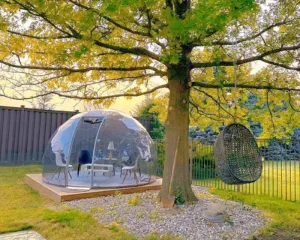
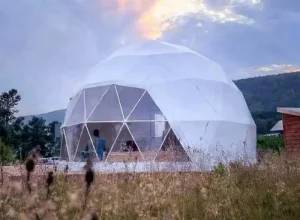
When investing in a campground, the most important factors besides choosing a good location are carefully selecting the campground accommodations. Building a unique and attractive campground often leads to a more successful investment.
In addition to permanent structures, there are also temporary structures on the market that are more suitable for campgrounds. These structures differ in design from traditional buildings, offering a more distinctive appearance that can attract visitors seeking a different living experience.
Campground cabin vs dome tents are two common types of campground tents. Both are quick to set up, saving time on construction and extending operational hours.
What are the differences between camping cabin tents and camping dome tents? How should one choose between them? Below, we will introduce the differences between the two types of tents.

Cabin Tent: A High-Value Comfort Experience
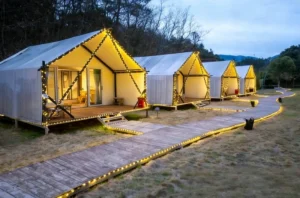
You can view the Cabin Tent as a **“high-value accommodation product”**. Its most distinctive feature is its vertical walls and spacious interior. This design is intended to provide ultimate accommodation comfort, allowing guests to move around freely inside the tent as they would at home.
Commercial Advantages:
Increase Average Revenue Per Customer: The spacious and comfortable interior can accommodate the needs of family or group customers, supporting higher rental prices and thereby increasing average revenue per customer and overall revenue.
Differentiated Competition: In a highly competitive market, offering standing space and a more “room-like” accommodation experience can attract customers seeking high-quality camping experiences.
Reduced Guest Complaints: An exceptional living experience effectively reduces complaints caused by cramped spaces, thereby enhancing customer satisfaction.

Dome Tent: A Stable Operational Foundation
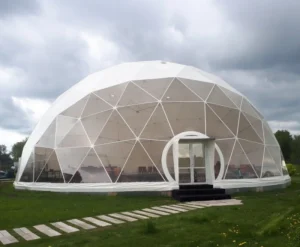
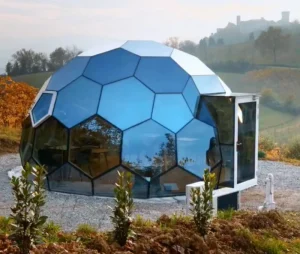
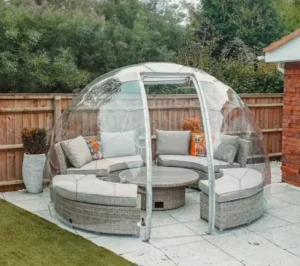
Dome tents are the “practical product” of the camping industry. Their streamlined dome structure is not only classic but also represents exceptional wind resistance and durability. For operators, this means lower maintenance costs and stronger environmental adaptability.
Commercial Advantages:
Excellent Durability: The streamlined design effectively disperses wind force, reducing the risk of damage in harsh weather conditions. This directly reduces the frequency and cost of repairs or replacements.
Efficient Setup and Maintenance: The simple structure allows for setup and dismantling by a single person, significantly saving on labor costs and time.
Wide Applicability: It can serve as a base camp for hikers and cater to customers with limited budgets or those seeking a “hardcore” camping experience, covering a broader customer base.
Cabin vs Dome Tents: A Commercial Comparison
In commercial camping operations, the choice between cabin vs dome tents often depends on investment budget, target customer base, and long-term operational planning. The two types of tents have distinct differences in design structure, user experience, and commercial value.
From an initial investment perspective, cabin tents typically have higher costs. They require more tent poles and fabric, and the manufacturing process is more complex, resulting in higher unit prices. This means campground operators face greater financial pressure during the initial investment phase. In contrast, dome tents are more cost-effective, featuring simpler structures, fewer materials, and lower manufacturing and procurement costs, which helps shorten the capital recovery cycle.
In terms of operations and maintenance, cabin tents are prone to damage from strong winds due to their vertical walls, resulting in higher maintenance and replacement frequencies, and thus higher overall maintenance costs. In contrast, dome tents have stable structures, strong wind resistance, and better durability, effectively reducing maintenance and replacement expenses, lowering long-term operational costs, and thereby improving the return on investment.
There are also differences in setup efficiency. Cabin tents have more poles, requiring more manpower and time to set up, especially when deploying multiple tents simultaneously in large campsites, which increases management complexity. Dome tents, with their simple design, can be quickly assembled, not only saving labor costs but also improving site utilization efficiency, making daily operations more time-efficient and labor-saving.
Differences in target customer groups also influence campsite positioning. Cabin tents are better suited for families and groups seeking a “luxury” camping experience, offering a home-like comfort that justifies higher pricing. Dome tents cater to a more mainstream market, appealing to budget-conscious hikers, backpackers, or customers requiring basic accommodation functionality. Different product positioning dictates the marketing strategies adopted by campsites.
In terms of space utilization value, cabin tents offer greater vertical space, allowing guests to stand and move around inside the tent while accommodating large air mattresses and luggage, providing an experience similar to a small cabin. This feature serves as a key support for premium pricing. Dome tents, however, have limited space and typically only meet sleeping needs, lacking standing room, which imposes certain limitations on overall comfort and added value.
Finally, environmental adaptability. Cabin tents with straight walls have weaker wind resistance and are not suitable for campsites with strong winds or variable climates. Dome tents, with their streamlined design, are not only aesthetically pleasing but also effectively withstand strong winds and heavy rain, demonstrating higher safety and reliability in extreme weather conditions. For campsites emphasizing year-round operations and safety, dome tents offer a clear advantage.
In summary, cabin vs dome tents are each suited to different commercial scenarios. Cabin tents emphasize comfort and spatial experience, better attracting high-end customer groups; dome tents are renowned for their cost-effectiveness, durability, and efficiency, making them an ideal choice for mass-market campsites. Campsite operators should consider budget, market positioning, and natural environment when selecting, and formulate the most appropriate investment and operational strategies.
How to choose the right option for your campsite?
The choice of tent ultimately depends on your business positioning and operational model.
If you aim to create a “high-quality resort campsite” centered on families and groups and are willing to invest more funds to achieve higher average revenue per customer and customer satisfaction, then campsite cabin tents are the perfect choice.
If you prioritize operational stability and efficiency, aim to serve a broader customer base at lower costs, or if your campsite is located in an area with strong winds, then durable, low-maintenance camping dome tents are a more reliable investment.
In addition to the above options, many campsites will set up both cabin tents and dome tents. Cabin tents are used to attract people who want to try out the experience, while dome tents are used to attract high-end customers. This approach achieves double growth in both profits and traffic.
Summary
Selecting the right location for a campground is half the battle for campground owners. Combined with effective operations and marketing, you can recoup your investment very quickly. When choosing between cabin vs dome tents, in addition to considering the environment, you should also base your decision on your business strategy and market positioning. If you want to attract more visitors, you can choose both types of tents to maximize traffic and revenue.
Gaxdome is a tent manufacturer specializing in hotel tents and commercial tents. If you have any further questions, please feel free to contact us. We will provide you with the most suitable advice and high-quality products based on our experience and professional knowledge.