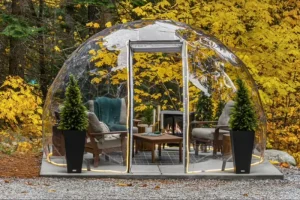
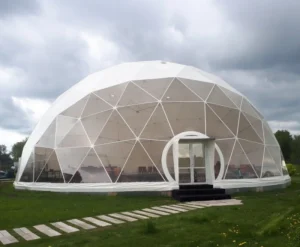
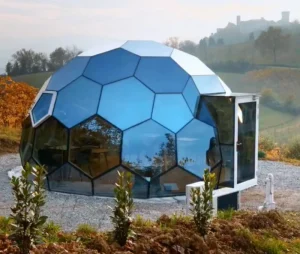
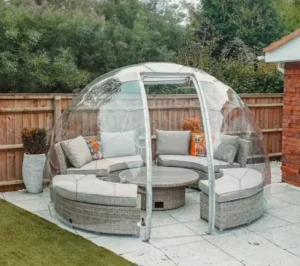
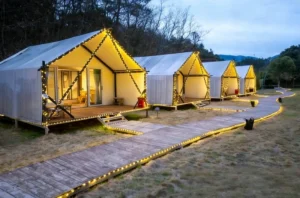
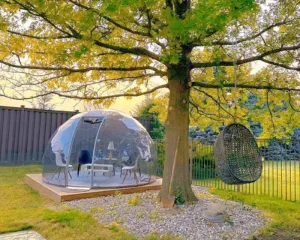
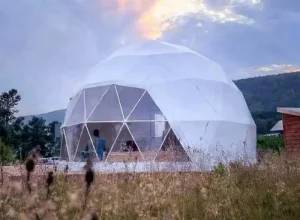
If you’re planning to purchase a 6-meter geodesic dome tent, whether for your glamping base or to create a unique event space, its price is undoubtedly your biggest concern.
A brand new, long-term usable 6-meter geodesic dome tent typically has a market price ranging from $2,100 USD to $6,500 USD.
Remember, this figure only represents the cost of the “bare” tent structure. The specific price depends entirely on your expectations regarding its construction and functionality:
- Basic: Approximately $2,100 – $3,600 USD. This configuration typically uses a standard galvanized steel tubular frame and basic 850g PVC fabric. They are ideal for budget-sensitive or short-term projects.
- Standard: Approximately $3,600 – $6,500 USD. When prioritizing safety and durability, you’ll opt for painted steel tubing or a lighter aluminum alloy frame, paired with flame-retardant fabric and a more practical glass door.
- Premium: Approximately $6,500 USD and above. If you’re committed to year-round operation and prioritize ultimate comfort, a high-quality aluminum alloy structure, double-layered insulation, and intelligent ventilation system are essential.
Tip: The final setup cost (including platform, shipping, and installation) typically reaches 1.5 to 2 times the price of the tent itself.
Why Choose a 6-Meter Dome Tent?
Choose a 6-meter geodesic dome tent not only boasts superior wind resistance and structural stability due to its unique triangular grid geometry, but also excels in space utilization.
It provides approximately 28.26 square meters of interior space with a vertical height of about 3 meters. This space is ample enough to easily set up a comfortable double bed, a relaxation sofa area, or cleverly arrange 4 to 6 dining tables. It’s arguably the star choice for luxury camping, private parties, or creative retail spaces.
5 Best Ways to Use a 6 Meter Dome Tent for Events and Living
Five Key Factors Behind the Price of a 6-Meter Geodesic Dome Tent
The price fluctuations of a 6-meter geodesic dome tent are not random; they are determined by investments in material selection, feature configuration, and safety certifications. To make a smart investment, you must understand these key factors and know where you can save costs.
Frame Material Selection
The frame is the “backbone” of a geodesic tent, and its selection directly affects your lifespan and site safety. The cost of the frame typically falls between $1,000 USD and $3,000 USD, accounting for 30%-40% of the total cost.
- Galvanized Steel Pipe (Economical Choice): Its advantage lies in its lowest cost and ease of production. However, if you deploy the tent in wet or rainy areas, you may find its rust resistance relatively limited, and its heavier nature also presents additional challenges for setup and transport.
- Painted Steel Pipe/Q235 Steel (Durable Mainstream): This is currently the mainstream choice on the market. After being painted, its strength and corrosion resistance are significantly improved, making it especially suitable for campsites or scenic areas where it is used permanently in one location.
- Aluminum Alloy (Luxury Choice): If your tent needs to be moved frequently or you require superior corrosion resistance (e.g., deployed at the beach), then an aluminum alloy frame is undoubtedly the best solution. Although it is the most expensive, its lightweight, aesthetically pleasing, and durable characteristics provide long-term value assurance for high-end projects.
Covering Fabric
The fabric is the “skin” of the tent, responsible for protecting it from wind, rain, and UV rays. Fabric costs typically fluctuate between $500 USD and $1,500 USD, mainly depending on weight and functionality.
- Standard PVC Fabric: You need to pay attention to its weight, usually between 850g/㎡ and 950g/㎡. The thicker the fabric, the stronger its durability and tear resistance.
- Flame Retardancy is a Commercial Necessity: More expensive B1-grade flame-retardant fabric is a mandatory safety standard for commercial operations; you cannot ignore it to save money. This is not only for regulatory compliance but also for the safety of clients and property.
- Fully Transparent Panels: To create a “starry sky” or panoramic view experience, many clients choose fully transparent PVC or PC (polycarbonate) panels. However, this custom structure is more expensive, and you must consider matching sunshade and insulation systems, otherwise, the indoor temperature in summer will be unbearable.
Door and Window Systems
Door and window design directly determines the user’s experience entering and exiting the tent and the overall aesthetics. The cost difference in door and window systems mainly lies in the materials, ranging from $200 USD to $800 USD.
- Basic Openings: The most economical option is a PVC roller shutter door secured with zippers or Velcro, but they offer only average performance in terms of sealing and security.
- Refined Upgrades: Sliding doors or casement glass doors with aluminum alloy frames not only have a more modern and beautiful appearance but also provide better security locks and windproof sealing, making them standard for mid-to-high-end configurations.
- Ventilation Design: Additional vents or custom skylights, while increasing manufacturing costs, effectively prevent stuffiness and condensation in humid weather, significantly improving comfort.
Internal Insulation and Lining Systems
If you plan to operate year-round, especially in cold or hot regions, an insulation system is an essential investment, costing between $500 and $1,500 USD.
- Insulating Liner: Typically a double-layered structure of cotton or fiber, its main function is to create an air gap, effectively insulating against external heat and reducing your reliance on air conditioning and heating.
- Insulation Film: Some high-end manufacturers use special insulating sprays or film technologies to fundamentally reduce heat radiation. Although expensive, this results in a more stable indoor microclimate.
Accessories and Structural Certification
A professional tent manufacturer provides value beyond the hardware itself. Structural certification documents cost approximately $100 to $500 USD, but this expense provides intangible security.
- Structural certification is the bottom line: You must request professional wind load calculation reports and snow load bearing data from the manufacturer. These documents are the most authoritative evidence of the tent’s structural safety and professionalism. If the manufacturer cannot provide them, the low price you receive is likely at the expense of safety.
- Anchoring System: Ensure that the standard accessories include an anchoring system (ground pegs, expansion bolts, or load-bearing plates) tailored to your site conditions to ensure the tent is securely fixed to the ground.
6-Meter Geodesic Dome Tent Price Analysis by Region
The price of 6-meter geodesic dome tents varies significantly across different countries and regions. These differences are typically determined by the manufacturing location, shipping distance, local labor costs, and applicable safety standards. Below is a clear illustration of price trends in major markets based on a standardized 6m dome configuration.
United States: $5,000 – $9,500 USD
In the US market, 6-meter dome tents are generally priced in the higher range. This is primarily due to high logistics costs, high import tariffs, and expensive local labor costs. In addition, the United States has strict regulations for building facilities, and some sites require additional insurance and certification documents.
The advantages of purchasing in the US are: generally more comprehensive warranty services and faster after-sales support, but the total investment is also among the highest globally.
Japan: $6,000 – $11,000 USD
Prices in Japan are higher, often at the top of the global range. Reasons include: extremely high import tariffs, international shipping costs, stringent seismic and safety certification requirements, and high local labor costs.
This market is suitable for buyers with extremely high requirements for safety, seismic performance, and service quality. Although expensive, the overall quality and standards are quite stringent.
Core EU Nations: $5,500 – $10,000 USD
Dome tents in core EU countries are typically priced in the mid-to-high range. This price reflects the EU’s requirements for product energy efficiency, environmentally friendly materials, structural safety, and processing precision, such as TÜV certification systems. Local manufacturers also invest more in design aesthetics and material selection.
Suitable for buyers seeking high-end design, energy efficiency, and consistent quality, offering good overall value.
Note: Prices listed above refer to the price of the “bare tent body” sold in the local market (excluding installation and additional accessories).
If you choose to source directly from major global manufacturers, such as China, the price of a 6-meter dome tent body can be as low as: $2,100 – $4,500 USD (factory price).
However, note that direct sourcing means you will incur additional costs:
- Sea freight
- Import duties
- Customs clearance fees
- Destination installation fees
When these costs are added together, your final “landing cost” will likely be close to, or even similar to, the price of a finished product purchased locally. Therefore, when sourcing internationally, it is essential to have a complete budget for the overall cost.

The Wisdom of Buying and Consulting for a 6-meter Geodesic Dome Tent
When you are ready to start inquiring about prices, shift your focus from “who is the cheapest” to “who offers the best value.” Price differences in dome tents are often not due to who makes the most profit, but rather to differences in configuration, structure, materials, and safety standards. Understanding these differences is the first step in making a smart purchasing decision. Before requesting a quote, clarify your true needs.
Before sending your first message to a supplier, it’s recommended that you take a few minutes to consider the following three core questions. These will directly determine the specifications you ultimately need and help you avoid common problems like “overkill” or “underkill.”
1. What is your intended use?
Is it for commercial operations, or just for occasional use in your backyard?
Commercial applications often require higher fire resistance, more durable materials, and a more stable structure; while personal use allows for more flexibility in choosing cost-effective solutions.
2. How long do you plan to use it?
Is it a three-month pop-up event? Or an outdoor scenic project lasting five years or more?
For long-term use, choosing a higher-strength, more corrosion-resistant frame (such as aluminum alloy) is more cost-effective; for short-term events, a more cost-effective steel frame model is preferable.
3. Is the operating environment harsh?
Does your area experience strong winds? Does it need to withstand snow accumulation? If environmental conditions are harsh, you shouldn’t hesitate—always choose thicker tubing, higher structural certifications, and more robust fittings. While the unit price will increase, it will prevent safety accidents and financial losses, ultimately saving you money in the long run.
Simply put: Purpose determines configuration, lifespan determines materials, and environment determines safety level.
Understanding these three issues will increase your quote efficiency several times over.
How to Understand a Quote: Avoid the “Seemingly Cheap” Trap
When you start inquiring with manufacturers, you’ll find that quotes from different suppliers vary greatly. To accurately compare, you must learn to identify the most critical information. A professional, transparent quote should at least include the following:
Frame Specifications
The quote must clearly state the diameter and wall thickness of the tubing.
This is the most critical parameter for judging the structural strength of a dome tent and the most fundamental difference between a “cheap tent” and a “durable tent.”
Fabric Parameters
Including fabric weight and fire rating, such as whether it meets B1 or higher standards.
The fabric not only affects lifespan but also whether commercial activities can successfully pass local safety inspections.
Logistics and Packaging Details
Includes box dimensions, volume, and quantity.
This data allows you to estimate sea or air freight costs yourself, avoiding the pitfalls of some suppliers inflating final costs with a “low product price + high shipping cost” approach.
By understanding this core information, you can easily distinguish which quotes offer genuine value and which merely create a “low price illusion” by cutting corners or compressing material specifications.
Summary
The final price of a 6-meter dome tent is a combination of factors including safety, comfort, design, and logistics. The huge difference between a couple thousand dollars and tens of thousands of dollars lies in your willingness to pay for a certain level of structural strength and user experience.
Now you understand all the core elements and regional trends. As a manufacturer dedicated to providing high-quality geodesic tent solutions, Gaxdome is ready to translate this knowledge into your real-world projects.
Our team of experts understands that every campsite is unique. Whether you’re interested in the premium aluminum alloy frame, B1-grade flame-retardant fabric, or the ultimate all-season insulation system mentioned in this article, we can provide you with a detailed, customized quote and structural safety certification documents based on your site conditions, climate requirements, and commercial budget, helping you precisely match your budget with your actual needs.
Contact Gaxdome today to start your project consultation and let us help you easily realize your high-quality luxury camping dream!