Why choose Dome House Kits
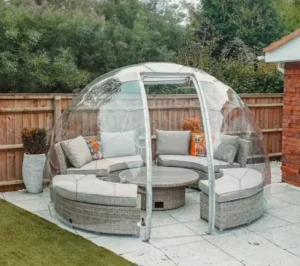
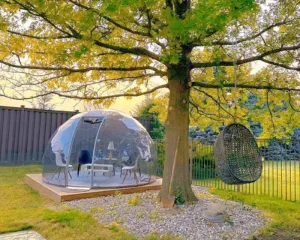
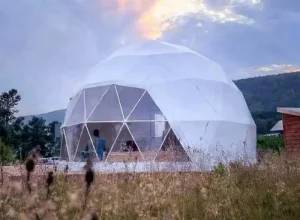
Dome houses, with their semi-spherical structure, naturally resist strong winds (with wind resistance ratings exceeding 200 km/h) and offer high space utilization (15%-20% larger than rectangular houses of the same area), making them a popular choice for niche residential and vacation homes in recent years. The “kit” model strikes a balance between “building flexibility” and “cost control”:
Modular Design: Factory-prefabricated main structure and panels, with on-site assembly required, reducing labor costs by 30%-50% compared to traditional construction;
Flexible Customization: From mini storage units to 100-square-meter residences, customization is achievable through combinations of “diameter + material + configuration”;
Environmental Sustainability and Energy Efficiency: The dome structure minimizes heat conduction, and when paired with insulation layers, heating costs in winter and cooling costs in summer are 25% lower than in conventional houses.
In simple terms, “kits” are not “shortcuts,” but rather use industrialized production to reduce costs while retaining personalized space—this is also the core reason for the significant price differences: the more complex your needs ,such as habitation or resistance to strong winds, the more you will need to pay for ‘functionality’ and “services.”
The 5 Key Factors Affecting Dome House Kit Prices
When purchasing Dome House Kits, there can be significant price differences—some costing a few thousand dollars, while others can reach tens of thousands of dollars. The price of Dome House Kits is determined by five key factors: materials, size, location, configuration, and brand.
Understanding the price structure not only helps you budget effectively but also avoids unexpected expenses later on. Whether for personal use, investing in a bed-and-breakfast, or as a unique architectural project, planning ahead and selecting the right supplier is a crucial step in ensuring a good return on investment.

1. Materials: From “temporary use” to “living for ten years,” the cost difference is threefold
Material is the primary factor influencing price, directly determining the dome house’s durability, insulation performance, and service life. The three common materials include:
PVC/polyethylene panels ($50–$120/㎡): Cost-effective, lightweight, and easy to install, but with weak UV resistance, they may age within 3–5 years, suitable for temporary storage sheds or pet houses.
Polycarbonate (PC) ($150–$300/㎡): Offers up to 85% light transmission and impact resistance 250 times that of glass, making it the mainstream choice for residential homes and small accommodations.
Fiberglass or steel structure + glass ($300–$600/㎡): High fire resistance rating (Class A), corrosion-resistant, and aesthetically designed, suitable for long-term residential use in vacation homes or high-end bed-and-breakfasts.
Case reference: A user in Hangzhou wanted to build a stargazing house with high light transmission and UV resistance, ultimately choosing PC panels ($200/㎡); however, if it’s only for storing gardening tools, PVC panels ($80/㎡) are sufficient, saving budget and avoiding frequent replacements.

2. Size: The larger the diameter, the faster the price increases
Dome house prices are closely related to diameter, but it is not simply “diameter × unit price.” As the diameter increases, structural complexity, the number of frames, and transportation difficulty all rise, thereby increasing costs.
Mini-type (3–5 meters): $3,000–$8,000, suitable for storage rooms, pet houses, or small studios, easy to transport but with limited space.
Residential (6–10 meters): $10,000–$25,000, suitable for guest rooms, offices, or compact residences. Note transportation restrictions for diameters over 8 meters; some regions may charge extra fees of $1,000–$3,000 for oversized loads.
Large/Custom Type (10 meters+): Starting at $25,000, commonly used for resorts, community centers, etc., requiring additional structural reinforcement and design costs.
Note: Many people mistakenly believe that larger diameters result in lower unit prices, but in reality, transportation and structural costs surge significantly beyond 8 meters. For budget-conscious projects, the 6–8-meter range offers the best cost-effectiveness.
3.Regional Differences: The Impact of Transportation, Taxes, and Labor Costs
The same brand and specifications of a kit may vary in price by tens of thousands of dollars across different countries, primarily due to the following factors:
Transportation Costs: Transportation costs for locally produced kits account for a low percentage (approximately 5%), while imported kits may incur an additional 15%-20% tariff.
Labor Costs: In countries like Japan, labor costs are high, accounting for 20%-30% of the total price; in China and other regions, labor costs only account for 5%-10%.
Certification Requirements: Europe requires CE certification, and North America may require FEMA wind resistance certification, which can add $1,000-$3,000 in costs.
Price Comparison (6-meter PC material):
Texas, USA: $12,000 (including transportation + installation guidance)
Berlin, Germany: approximately $13,000 (including CE certification + tariffs)
Recommendation: Purchase domestically and prioritize local manufacturers to save on tariffs and long-distance transportation costs; overseas, choose brands with local factories to avoid high shipping and customs clearance costs.

4. Functional Configuration: Raw, Semi-Custom, or Fully Packaged
Prices vary significantly between different configurations, primarily depending on whether you prefer to handle installation yourself or have the manufacturer handle everything.
Basic Kit (Raw): Includes only the structure and panels, requiring you to procure doors, windows, plumbing, electrical, and insulation separately. Suitable for users with DIY experience, saving 30%-40% in costs.
Semi-Custom Kit: Includes basic doors, windows, and insulation, with some installation required by the user. This is the most cost-effective option.
Fully Packaged Kit: Includes design, plumbing/electrical work, and interior finishes, even allowing for “move-in ready” completion. Labor costs are significantly higher (domestic: $3,000–$8,000; overseas: $8,000–$15,000).
Recommendation: For first-time dome house construction, the semi-custom option is the safest choice, allowing for some customization while avoiding potential issues during construction.
5. Brand and Certification: Spend an additional 15%-30% for more reliable after-sales service
There are many lower-priced “unbranded” kits available, but they often lack certification and reliable after-sales service, posing certain risks.
White-label kits (6m PC): $8,000–$15,000, may have material mislabeling issues, and short warranty periods (1–2 years).
Well-known brands (6m PC): $10,000–$18,000, provide fire resistance ratings and UV resistance test reports, longer warranty periods (5–10 years), and remote guidance and repair services.
Case study: A user purchased a white-label kit, and after six months, the panels yellowed due to insufficient UV resistance. The manufacturer could no longer be contacted, and the user had to spend $2,000 to replace them.
Conclusion: If you plan to use the product long-term (over five years) or have high safety requirements, it is recommended to choose a well-known brand; for temporary use, white-label products can be considered, but fire-resistant and weather-resistant parameters must be confirmed.
2025 Dome House Kits Price Reference: Quickly Match Your Needs
To help you shop for Dome House Kits more efficiently, we have compiled a price range for mainstream kits in 2025 based on different uses, sizes, and materials. Whether you are temporarily setting up a storage room or planning to build a high-end vacation home, you can find the answers you need here.
1. Mini Storage Type (3–5 meters in diameter)
If you need a temporary space for tools, a pet house, or simple storage, the mini type is the most economical choice. Typically made from PVC or PE panels, prices range from $3,000 to $8,000. These materials are lightweight and easy to install, making them ideal for those on a tight budget or planning short-term use.
2. Economy Residential Type (6–8 meters in diameter)
Suitable for use as a guest room, home office, or compact residence, this type uses polycarbonate (PC) panels and costs between $10,000 and $18,000. PC material offers high light transmission and durability, meeting the needs of small families or first-time dome house builders, making it a cost-effective choice.
3.Mid-Range Vacation Type (8–10 meters in diameter)
If you want to build a comfortable vacation home or creative studio, consider the mid-range vacation type. It typically uses PC panels with insulation layers to ensure year-round comfort, priced between $18,000 and $25,000. Suitable for those with a second home who prioritize comfort.
4. High-End Customized Type (10 meters or more in diameter)
Large or customized dome houses are often used for community centers, high-end bed-and-breakfasts, or commercial purposes. They are typically made of fiberglass or steel structures combined with high-strength glass, offering both a modern design and long-lasting durability. Prices start at $25,000, making them suitable for buyers seeking unique designs and high-end experiences.
How to Choose Dome House Kits Based on Your Budget? 3 Practical Tips
After reading the analysis above, you may already have a general idea of your needs. Here are 3 more tips for choosing kits based on your budget to help you avoid pitfalls:
Budget ≤ $10,000: Prioritize “mini-sized + PVC material” and don’t overspend on “residential features”
If your budget is between $5,000 and $10,000, don’t aim to build a full-fledged residence all at once—opt for a 3-5 meter mini dome house made of PVC panels for storage or a pet house. This meets your needs without exceeding your budget. Once you have more funds later, you can upgrade the materials or expand the size.
Budget of $10,000–$20,000: Choose mid-range PC material + 6–8-meter diameter to balance “living” and “usage”
This budget range is the “golden standard” for family residences: a diameter of 6–8 meters is sufficient to accommodate a bed, sofa, and small kitchen (approximately 30–50 square meters). PC material offers good light transmission and impact resistance, paired with semi-custom kits (including basic doors and windows), ensuring living comfort without overspending on “over-specced” features.
Budget ≥ $25,000: Opt for a fully packaged kit from a well-known brand, focusing on “wind/earthquake resistance certification”
If the budget is sufficient (e.g., for building a high-end guesthouse or community center), prioritize fully packaged kits from well-known brands like Gaxdome or domestic dome technology companies. Focus on two certifications: wind resistance rating (at least 180 km/h) and fire resistance rating (at least B1 grade) to ensure long-term safety.
Summary
In the 2025 Dome House Kits market, the essence of price differences lies in “differences in demand”: if you need temporary storage, choose a mini-type with economical materials; if you plan to live there long-term, choose a mid-range PC with certified brands; if it’s for commercial use, choose a large custom-made option with full-package services.
Remember: Do not blindly pursue “low prices” or “high prices”—low prices may hide the risk of “substandard materials,” while high prices may include “unnecessary configurations.” Clarify your needs (will it be used for living? Does it need to withstand strong winds?), then combine factors such as materials, size, and region to select the most suitable kit.